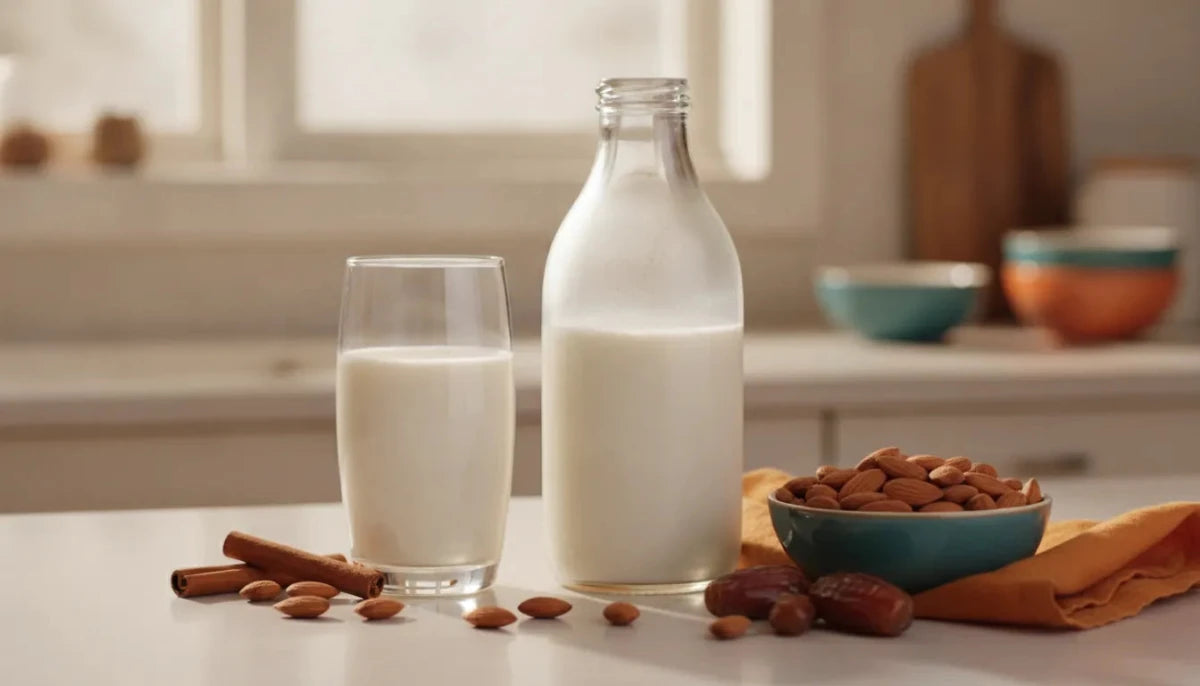
Almond milk can look simple on the front of a carton, yet the ingredients, processing, fortification, and storage instructions can vary widely from one product to the next. That makes the label more useful than a broad "fresh versus packaged" assumption.
Explore PUR almond milk options and compare the current product details for your routine.
Cold pressed almond milk describes a processing approach, not a guaranteed nutrition profile or a promise that the drink is unsweetened. The plant source, added ingredients, and processing methods can all affect what is in the finished beverage, so compare the ingredient list and Nutrition Facts label before choosing. The FDA recommends checking details such as calcium fortification, added sugar, and protein when comparing plant-based milk alternatives: FDA guidance.
Once you understand what the term means, it becomes easier to compare a refrigerated nut milk with a shelf-stable option on practical points that matter. Including ingredients, nutrient details, and how each fits your routine.
What Is Cold Pressed Almond Milk?
Cold pressed almond milk is a plant-based drink made by processing almonds and water through a pressure-based method. With the phrase "cold pressed" describing the process rather than guaranteeing a specific nutrition profile. The result is typically a smooth, fresh-style beverage that can be enjoyed on its own, poured over breakfast, or blended into a smoothie.
What the cold-pressed label tells you
At its simplest, cold pressing refers to extracting liquid from prepared ingredients without making heat the defining part of the extraction process. That description does not tell you the exact almond-to-water ratio, protein content, sweetness, fortification, or full ingredient list. Those details depend on the individual product and its label.
It is also useful to separate process from product positioning. A cold pressed almond milk may have a short ingredient list. But the words alone do not prove that it is unsweetened, additive-free, higher in protein, or nutritionally better than every packaged alternative. The U.S. Food and Drug Administration notes that plant-based milk alternatives can vary based on their plant source, processing methods, and added ingredients. Its guide to comparing milk and plant-based milk alternatives is a useful reference when you want to look beyond front-of-package language.
Fresh-style versus shelf-stable packaging
Many cold-pressed products are handled as fresh or refrigerated beverages, while shelf-stable almond milk is packaged to remain unopened at room temperature. These are different storage and convenience models, not automatic rankings of quality. A refrigerated product may suit someone who prefers a fresh-style drink and has space in the refrigerator. A shelf-stable carton may work better for a pantry, office drawer, or backup supply.
Check the package for storage instructions, use-by guidance, serving size, and the Nutrition Facts panel. Look especially at added sugar, protein, calcium, and vitamin D if those nutrients matter to your routine. For a broader look at how plant-based drinks can fit alongside fitness and everyday nutrition choices, visit this protein juice cleanse and fitness nutrition guide. The simple rule is to compare the actual product in front of you, not assume that one processing label tells the whole story.
How Cold Pressed Almond Milk Differs From Store-Bought Versions
The biggest difference is not simply that one is "fresh" and the other comes from a package. Cold pressed almond milk and store-bought almond milk can use different processing methods, ingredient lists, storage systems, and serving expectations. The details vary by product, so the label matters more than a broad category claim.
Compare the process, not just the package
Cold pressed almond milk is generally made for refrigerated handling and near-term use, while many packaged versions are designed for longer storage and convenient pantry stocking before opening. That does not make one automatically better. It means the products are built for different routines. A refrigerated drink may fit someone who wants a ready-to-enjoy option delivered cold, while a shelf-stable carton may be easier to keep on hand for occasional use.
Ingredient and nutrition differences can be just as important as processing. The FDA explains that plant-based milk alternatives vary according to their plant source, processing methods, and added ingredients. Its guidance recommends using the Nutrition Facts label to compare products, including protein, added sugar, and fortification. You can read the FDA's comparison guidance for more detail.
| What to compare | Cold pressed almond milk | Store-bought almond milk |
|---|---|---|
| Processing | Often made with a refrigerated, shorter-use format and a process centered on pressing or blending ingredients. | May use processing and packaging designed for longer storage. Products are not all made the same way. |
| Ingredients | May have a short ingredient list, but check the specific bottle for sweeteners, flavorings, stabilizers, and other additions. | Ingredient lists vary widely. Compare the order and purpose of ingredients rather than assuming every carton has the same formula. |
| Fortification | Do not assume calcium or vitamin D has been added. Check the Nutrition Facts label. | Some products are fortified, while others may provide different amounts. Verify the label instead of relying on the word almond. |
| Storage | Typically requires attention to refrigeration and the product's use-by guidance. | Some products are shelf-stable until opened, while refrigerated versions require cold storage. Follow the package directions. |
| Convenience | Works well for a planned routine when refrigerated delivery and shorter use windows fit your schedule. | Can be convenient for pantry storage, travel planning, or keeping a backup available. |
One detail deserves extra attention: fortification. The FDA notes that many plant-based alternatives do not contain the same amounts of calcium and vitamin D as milk. If those nutrients matter to your routine, look for their listed amounts rather than assuming cold pressed or store-bought tells you enough.
The same approach applies to protein and added sugar. A flavored almond milk may have a different sugar profile from an unsweetened version, and a protein blend may not compare directly with a plain drink. For a refrigerated option, follow the product's storage and date instructions. For a shelf-stable carton, check whether refrigeration is required after opening. A simple label check gives you a more useful comparison than a blanket fresh-versus-packaged judgment.
What Is in PUR's Almond Vanilla Protein Blend?
A product page can make an almond milk blend easier to understand than a broad category label. PUR's Vanilla Almond + Protein is described as an almond milk beverage built around a short. Recognizable flavor profile: dates for natural sweetness, cinnamon for spice, vanilla for its signature flavor, and vegan protein. That makes it a useful example when you are learning how to read a cold pressed almond milk product description without assuming that every almond milk is made the same way.
The ingredients described on the product page
Here is what PUR's current product description identifies:
- Almond milk: the base of the beverage and the source of its creamy, nut-based character.
- Dates: included for natural sweetness and a fuller flavor.
- Cinnamon: a warm spice that complements the almond and vanilla notes.
- Vanilla: the defining flavor in this blend.
- Vegan protein: added to make the drink a protein-focused option.
This description gives you the product's central concept, but it is not a substitute for the current package label. Exact nutrition values, serving information, allergen statements, and the complete ingredient list can change or depend on the product labeling in effect. Check the label before purchase, especially if you are avoiding specific ingredients or comparing protein, sugar, or fortified nutrients.
How to use the product description when comparing almond milk
Start by separating flavor language from verified label information. Words such as vanilla, cinnamon, and dates describe the intended taste and ingredient story. The Nutrition Facts panel and ingredient list provide the details needed for a closer comparison. Look at serving size first, then review the full ingredient order and the stated protein amount. Do not assume that a product is unsweetened, fortified, allergen-free, or nutritionally equivalent to another almond milk unless its current label says so.
If you want to compare formats or flavors, browse the PUR almond milk collection. The simple approach is the most useful one: use the product page to understand what a blend is designed to be. Then use its current label to decide whether it fits your preferences.
Related products

Get your new go-to meal replacement with our delectable Vanilla Almond Milk + Protein.
View product
Bold coffee character with a smooth finish.
View product
What to Look For on an Almond Milk Label
A quick label check can tell you far more than the words on the front of a carton or bottle. The FDA notes that plant-based milk alternatives can vary in nutrition, and the Nutrition Facts label helps shoppers compare products. Use this checklist when choosing cold pressed almond milk for your routine.
A simple label-reading checklist
- Start with the ingredient order. Ingredients appear by weight, from greatest to least. Look for an ingredient list that matches what you want to drink, and note sweeteners, flavors, oils, gums, or other additions. A short list is not automatically better, but every item should be familiar or worth understanding.
- Check added sugar. Look at the "Includes added sugars" line in the Nutrition Facts panel rather than relying on words such as natural or lightly sweetened on the front. If you prefer a less sweet option, compare products by serving instead of assuming that almond milk is unsweetened.
- Review the protein. Almond milk products can differ in protein content, especially when a product includes another protein ingredient. Compare the grams per serving with how you plan to use the drink. For a current PUR example, review the label details for the PUR almond milk daily pack before making nutrition comparisons.
- Look for calcium and vitamin D. Fortification varies. The FDA specifically recommends checking nutrients such as calcium and notes that many plant-based alternatives do not contain the same calcium and vitamin D amounts as milk. Check the actual percentages on the panel instead of assuming fortification.
- Confirm the serving size. Calories, sugar, protein, and micronutrients are listed per serving. If you pour more or less than that amount, adjust your comparison accordingly. Also check how many servings are in the container.
- Scan allergen information. Check the required allergen statement and the full label for ingredients that may not fit your needs. Almond milk contains tree nuts, and flavored or protein-containing blends may include additional ingredients. When in doubt, use the current package label as your source of truth.
- Read storage and date guidance. Follow the product's refrigeration instructions, whether it needs to stay cold before opening, and the directions after opening. A use-by or best-by date is useful only when paired with the stated storage instructions. Fresh products may have different handling requirements from shelf-stable products, so do not apply one product's guidance to another.
There is no single label that works for everyone. Comparing the ingredient list, added sugar, protein, fortification, serving context, allergens. And storage directions gives you a clearer picture of what you are buying and how it fits your day.
Source: FDA guidance on milk and plant-based milk alternatives.
How Almond Milk Fits Into a Daily Wellness Routine
A simple routine makes it easier to enjoy almond milk without treating one drink as a solution for every wellness goal. Use it where it fits your schedule, then check the current product label for ingredients, serving size, allergens, and nutrition details.
Simple ways to use it throughout the day
- At breakfast: Pour almond milk into oats, chia pudding, or a blended breakfast. Choose a flavor and sweetness level that works with the rest of the meal, especially if you are already adding fruit, dates, or granola.
- In a smoothie: Use it as the liquid base for fruit, greens, or a protein blend. The finished drink can be as simple or substantial as your morning calls for. For a ready-to-drink option, explore PUR's chocolate almond milk option.
- After a workout: Pair an almond milk drink with a meal or snack that suits your appetite and routine. If protein is part of your usual plan, review the label rather than assuming every almond milk contains the same amount.
- During a cleanse-adjacent routine: Almond milk can be one component of a planned day alongside other foods and beverages. Keep the approach flexible, follow the product directions, and avoid using a cleanse as a substitute for medical care or individualized nutrition advice.
For busy mornings, the PUR almond milk daily pack can make portion planning more convenient. It is also a practical way to build variety into a week without preparing every drink from scratch. The goal is not to follow a perfect schedule. It is to choose a product that matches your preferences, storage needs, and the way you already eat.
Is Cold Pressed Almond Milk Better for You?
Whether cold pressed almond milk is better depends on what you want from a plant-based drink. Freshness and a short ingredient list may matter to one person, while another may prioritize fortification, protein, convenience, or a longer storage window. The words "cold pressed" describe a processing approach, not a complete nutrition profile.
What cold pressing does and does not tell you
Cold pressing can describe how ingredients are processed, but it does not automatically tell you how much almond. Protein, calcium, vitamin D, sugar, or other ingredients are in the finished drink. The FDA notes that plant-based milk alternatives can vary based on their plant source, processing methods, and added ingredients. Its guidance recommends checking the label carefully when comparing products: read the FDA's guide to milk and plant-based milk alternatives.
Start with the ingredient list and Nutrition Facts panel. Look for added sugar if that is important to you, then compare protein and check whether calcium or vitamin D has been added. Many plant-based alternatives do not contain the same amounts of calcium and vitamin D as dairy milk, so fortification can be a meaningful difference between products.
Storage and freshness are practical considerations too. A refrigerated product may suit someone who values a fresh, ready-to-drink option, while a shelf-stable carton may be easier to keep on hand. Neither choice is universally better. Your routine, serving needs, taste preferences, ingredient priorities, and the current product label should guide the decision.
In simple terms, choose the drink that fits your goals and gives you the information you need. Cold pressed almond milk can be a good fit, but the processing phrase should be the beginning of your comparison, not the conclusion.
Browse PUR almond milk and protein options to compare current products and choose what fits your routine.
Frequently Asked Questions
What should I look for in almond milk ingredients?
Start with the ingredient list and Nutrition Facts panel. Look for the almond base, water, any sweeteners or flavorings, added oils or stabilizers, and whether the product is fortified. A shorter list may suit your preferences, but "clean" is personal, so compare the label with how you plan to use the drink.
Is cold-pressed almond milk healthier than store-bought almond milk?
Cold-pressed describes a process, not a guaranteed nutrition profile. Ingredients, fortification, serving size, and storage can vary widely between products. The FDA recommends using the label to compare nutrients such as protein, added sugars, calcium. And vitamin D rather than assuming every plant-based milk is nutritionally interchangeable with dairy milk (FDA guidance).
Does almond milk need to be heated?
No. You can use it cold in smoothies, coffee, cereal, or other recipes, or warm it gently when that fits the recipe. Heating is a personal use choice and does not make one processing method universally better. Follow the product's storage and handling directions, especially after opening.
How can I compare fresh and shelf-stable almond milk?
Compare the same details on both labels: ingredients, added sugar, protein, calcium, vitamin D, serving size, and storage instructions. Also check whether the product is sweetened or flavored. This approach is more useful than treating every refrigerated or shelf-stable product as the same.
Ready to Explore PUR Almond Milk Options?
Comparing labels is a simple way to choose a plant-based drink that fits your routine and preferences. Explore PUR's almond milk and plant-based protein options to find a blend that works for breakfasts, smoothies, or an easy grab-and-go moment. Get started with PUR's almond milk collection and review each product's current details before ordering.