Juice cleanses can sound more complicated than they are. At their simplest, they replace some or all solid food with prepared juices for a defined period. The goal is a clear routine to follow, not another open-ended diet rule.
So, what is a juice cleanse? It is generally a short-term liquid-focused plan built around fruit and vegetable juices, although formats vary. Some are juice-only, while others include a sensible meal or additional foods. A cleanse may last from one day to about a week, but it is not a proven way to remove toxins or guarantee lasting weight loss. The University of Rochester describes the common range as one day to one week.
Once you understand that basic structure, the practical details become easier to evaluate: what you drink. What may be missing, and how a prepared cold-pressed juice compares with juicing at home.
The Simple Definition: What Is a Juice Cleanse?
A juice cleanse is a short-term eating plan centered on drinking juice instead of eating most or all solid foods. A traditional version is liquid-only and may last anywhere from one day to one week, according to University of Rochester Medicine. Some plans are more flexible, pairing several juices with a simple meal or other plant-based foods.
That difference matters when comparing cleanse programs. A juice-only plan limits the range of foods you consume for a set period. A juice-plus-meal format still makes juice the focus, but leaves room for one balanced meal. PUR, for example, describes its full format as six juices per day and its mini format as four juices plus one sensible meal. You can review those PUR juice cleanse options to see how the formats are structured.
What a cleanse can and cannot promise
Juice can provide many of the vitamins, minerals, and plant chemicals found in fruit, but most juicing removes fiber. Fiber supports fullness and digestive health, so juice is not nutritionally identical to eating whole fruits and vegetables. A juice cleanse also may not provide the full mix of protein, fats, and fiber found in a varied diet.
It is best to treat the word "cleanse" as a description of a temporary food routine, not a guarantee of detoxification. The National Center for Complementary and Integrative Health says only a small number of studies have examined detoxification programs in people. And the available research does not provide compelling support for using detox diets to remove toxins or manage weight. NCCIH's overview of detoxes and cleanses explains the evidence in more detail.
In simple terms, a juice cleanse changes what you eat and drink for a limited time. The right format depends on your preferences and routine. It is not a medical treatment or a promise of a specific outcome.
What You Drink and What You Skip During a Cleanse
The contents of a cleanse depend on the format. In a juice-only plan, your daily intake centers on prepared fruit and vegetable juices instead of solid meals. In a juice-plus-meal plan, juice remains the main part of the day, but one balanced meal is included. Both approaches are examples of what people may mean when asking, "what is a juice cleanse?" They are not identical eating patterns, so checking the plan details matters.
PUR offers a full cleanse format with six juices per day. Its mini format includes four juices plus one sensible meal per day. You can review the available PUR juice cleanse options to compare formats rather than assuming every cleanse follows a juice-only schedule.
| Format. | What it includes. | What to check. |
|---|---|---|
| Full cleanse. | Six juices per day. | Spacing and ingredients. |
| Mini cleanse. | Four juices plus one sensible meal per day. | Meal details and instructions. |
| Juice-only plan. | Juice in place of solid meals and snacks. | Whether limited fiber, protein, and fat fit your needs. |
What a juice-only format includes
A juice-only format generally includes several servings of juice spaced throughout the day. The recipes may combine fruits, vegetables, and other plant ingredients, depending on the specific cleanse. Water is also commonly part of a person's normal routine. The practical difference is that solid meals and snacks are set aside for the duration of the plan.
Juice can provide many of the vitamins, minerals, and plant chemicals found in fruit, but most juicing removes healthy fiber, according to the Mayo Clinic. Fiber is found in the whole plant, not just its liquid. A juice-only plan may also provide less protein and fat than a varied diet. So it should not be treated as a complete replacement for everyday nutrition without considering your individual needs. Mayo Clinic explains the nutrition tradeoffs of juicing.
- Drink: The juices included in the selected cleanse, along with water as appropriate for your usual routine.
- Skip: Solid meals, snacks, and unplanned add-ons in a juice-only format.
- Keep in mind: Juice does not provide the same fiber, protein, and fat profile as whole foods.
What changes in a juice-plus-meal format?
A juice-plus-meal format makes room for one sensible meal while keeping juice as the day's central offering. That meal changes the experience from strictly liquid-only to a more flexible structure. It may be useful for people who prefer not to remove solid food entirely, but the right choice depends on personal circumstances, preferences, and the product's instructions.
- Read the exact format and serving details before ordering.
- Check which foods or meals are included, if any.
- Review the ingredient list and plan the timing around your normal schedule.
Neither format should be sold as a guaranteed detox, weight-loss, or treatment plan. Juice can be one convenient way to add produce to your routine. A cleanse remains a temporary eating pattern with nutritional limits.
If you are pregnant, managing a health condition, taking medication, or unsure whether a cleanse is appropriate, speak with a qualified health care professional before starting one.
How Cold-Pressed Juice Is Different From What You Juice at Home
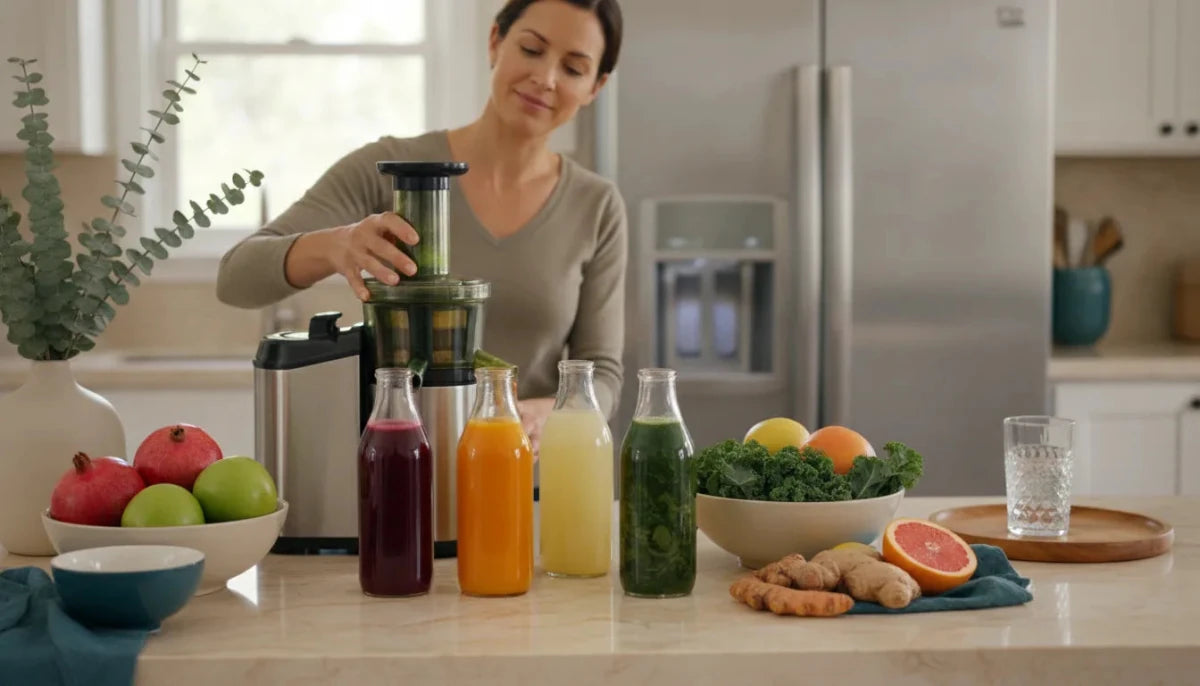
At home, juicing usually means feeding produce through a countertop machine and drinking the result soon afterward. Cold-pressed juice uses a different extraction process. Instead of relying on a high-speed blade, a hydraulic press applies pressure to crush and separate juice from the plant material. The practical difference is less about a magical health upgrade and more about how the juice is made, handled, and prepared for drinking.
What the cold-press process changes
Home juicing gives you direct control over the produce, portions, and timing. You can make one glass when you want it, adjust the flavor, and use the pulp in another recipe. It also requires shopping, washing, chopping, cleaning the equipment, and drinking the juice promptly.
Commercial cold-pressed juice can offer a more convenient alternative when you want ready-to-drink combinations without doing that preparation yourself. PUR says its juice is pressed and bottled within one hour of harvest at its Monterrey operation. PUR also positions its juice as raw and unpasteurized, with no HPP or heat treatment. Those details describe the product's processing and freshness approach, not a guaranteed health result.
Whether you use a home juicer or buy a bottled cold-pressed option, the basic nutritional tradeoff remains important. Most juicing separates the liquid from the produce's natural fiber. Mayo Clinic explains that juice contains many vitamins, minerals, and plant chemicals found in fruit. Most juicing removes fiber, which supports fullness and digestive health. Cold-pressing does not put that fiber back into the bottle. If fiber matters to your meal or snack, whole produce or a blended preparation may be a better fit for that occasion.
Choosing between home and ready-to-drink juice
Home juicing may suit you if you enjoy experimenting with produce and have time for cleanup. Ready-to-drink juice may be more practical when convenience, variety, or a structured cleanse format matters more. You can browse PUR's individual cold-pressed juice flavors to compare available options.
Cold-pressed describes how juice is extracted. It does not make juice equivalent to whole produce, restore lost fiber, or prove that a cleanse will deliver a particular health benefit.
Related products


The Signature Mini Cleanse provides a 3-day detox with fresh, cold-pressed juices.
View product
Select six juices, lemonades, or mylks per day
View productHow Long Do Juice Cleanses Usually Last?
Juice cleanses can be structured for different lengths, from about one day to one week. The duration usually describes how long someone follows the plan's intended format, whether that means juice only or juice alongside a meal. It is a descriptive range, not a universal recommendation. If you are comparing formats, PUR's guide to juice cleanse duration options offers more detail on how these time frames differ.
Shorter plans are often easier to fit around a normal schedule and give readers a limited window for trying a juice-focused routine. Longer plans involve more days of following the format and may require more planning around meals, work, travel, and social commitments. The practical experience can also vary depending on whether the plan includes only juice or allows a sensible meal. Neither length should be treated as automatically better.
PUR's available cleanse durations
PUR offers cleanse programs in three-, five-, and seven-day durations. These options let customers compare a brief plan with programs that extend across most of a week, while keeping the choice tied to the format they are considering. A three-day plan is one clearly defined starting point in the PUR collection, and you can review the three-day juice cleanse options for current product details.
When looking at a duration, check what is included each day, how the products should be stored, and whether the schedule matches your routine. PUR's cleanse collection includes different formats and product combinations, so the number of days alone does not tell the whole story. The broader evidence around detoxification programs is limited, and the long-term effects have not been studied, according to the National Center for Complementary and Integrative Health. Treat the duration as a planning detail rather than a promise about what a cleanse will do for your body.
Is a Juice Cleanse Right for You?
Whether a juice cleanse fits your routine depends on what you want from it. How you normally eat, and whether a short-term liquid plan is appropriate for your health needs. A cleanse can be a structured way to try several juice flavors or simplify food planning for a limited time. It should not be treated as a guaranteed detox, a medical treatment, or a reliable long-term weight-loss strategy.
The evidence is also more limited than some wellness marketing suggests. The National Center for Complementary and Integrative Health says only a small number of studies have examined detoxification programs, and those studies are generally limited. Mayo Clinic likewise reports no strong scientific proof that juice cleanses remove toxins, improve digestion, or cause lasting weight loss. Any short-term change on a low-calorie plan may not represent lasting fat loss. Weight can return after a person resumes a typical diet. See the Mayo Clinic overview of juicing and the NCCIH guidance on detoxes and cleanses for more context.
Consider the format, not just the label
A juice-only plan may not provide the full range of calories, protein, fat, and fiber found in a varied diet. Most juicing removes fiber from whole fruits and vegetables, even when the juice is cold-pressed. If a liquid-only approach sounds too restrictive, a format that includes a sensible meal or additional ingredients may feel more practical. PUR, for example, describes a full format with six juices per day and a mini format with four juices plus one sensible meal. These are product structures, not individualized nutrition advice.
Use this quick checklist before deciding:
- Am I choosing this for convenience or a short-term reset of my routine, rather than a promise of detoxification or lasting weight loss?
- Have I considered whether a juice-only plan gives me enough variety and nourishment for my schedule?
- Can I plan hydration, work demands, exercise, and a gradual return to regular meals without treating the cleanse as an all-or-nothing test?
- Have I checked the ingredients and storage instructions for the specific products I plan to use?
- Would a flexible option, such as juice alongside a meal, better match my needs?
Some people should get individualized guidance before changing their usual eating pattern. If you are pregnant or nursing, speak with a health care provider before starting a cleanse. Do the same if you manage a health condition, take medication, or have another nutrition or food-safety concern.
The National Institutes of Health specifically recommends discussing a planned detox diet or cleanse with a health care provider to make sure it is safe. That conversation can help you decide whether a cleanse is appropriate, what format may be reasonable, and what warning signs should prompt you to stop. Keeping expectations simple and realistic is the healthiest place to start.
Frequently Asked Questions
What do you eat on a juice cleanse?
On a juice-only cleanse, you drink prepared fruit and vegetable juices instead of eating solid meals. Some flexible formats include a sensible meal or other whole foods, so check the plan before you begin. Because juicing usually removes most of the fiber, juice-only plans may also provide less fiber, protein, and fat than a varied diet.
What are the rules for a juice cleanse?
Rules vary by program, but a cleanse generally outlines which juices to drink, how often to drink them, and whether water, herbal tea, or a meal is included. The practical rule is to follow the specific format rather than assuming every cleanse is juice-only. Avoid treating a cleanse as a medical treatment or a guaranteed way to detox.
What will a 3-day juice cleanse do?
A three-day cleanse gives you a defined, short-term structure for drinking juices in place of some or all solid meals. It may change what and how much you consume, but individual experiences vary. There is no strong scientific proof that juice cleanses remove toxins, aid digestion, or create lasting weight loss.
Do you actually lose weight on a juice cleanse?
Some people may see an initial change on a low-calorie juice plan, but that does not necessarily represent lasting fat loss. The National Center for Complementary and Integrative Health notes that initial weight loss may be followed by weight gain after returning to a normal diet. Weight changes should not be the only measure of whether a cleanse is appropriate.
Are cold-pressed juices enough to meet nutritional needs?
Cold-pressed juice can provide nutrients from fruits and vegetables, but the pressing method does not restore the fiber removed during juicing. A juice-only plan may not provide the full range of protein, fats, and fiber found in a varied diet. If you have a health condition, take medication, or are unsure whether a cleanse is safe, discuss your plan with a health care provider first.
Ready to Explore a Cleanse That Fits Your Routine?
Now that you know what a juice cleanse includes, you can choose a format that matches your preferences and schedule. PUR offers cleanse options designed to keep the process simple, with room to explore different durations or find a more customizable approach. When you are ready to compare formats, explore PUR's cleanse options and get started with the choice that feels practical for you.