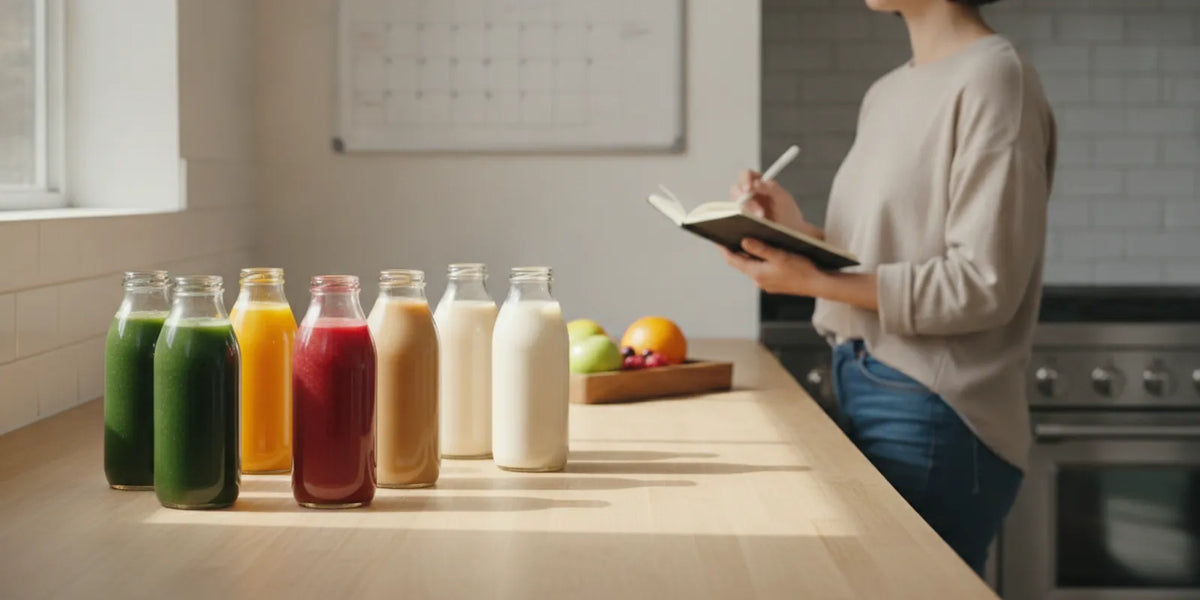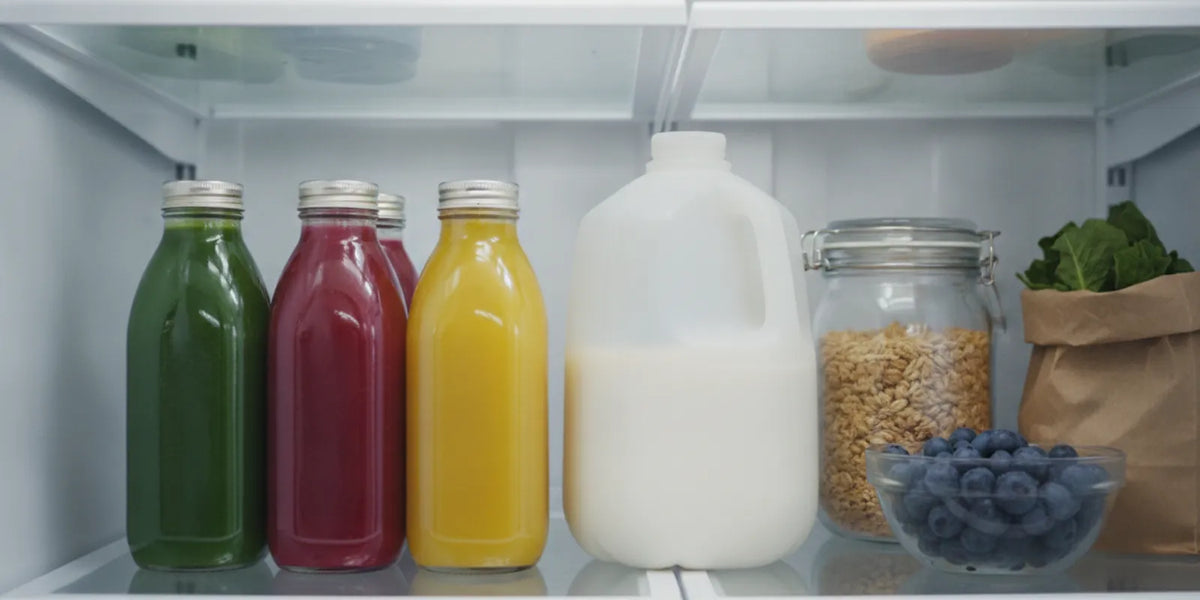
How long does cold pressed juice last? The answer depends on the product, its date label, and how it has been handled. Keep the bottle cold, follow its printed use-by or expiration date, and do not assume every juice has the same refrigerated life. For a delivered order, use the storage directions on the package and product label as your guide.
Ask PUR a question about your order
How long does cold pressed juice last in the refrigerator?
There is no single shelf-life number that applies to every cold pressed juice. Ingredients, processing, packaging, temperature, and handling can all affect how long a particular bottle is suitable to drink. The most reliable answer is the date and storage information provided for that product. Check the label or the product information that came with your order rather than using a general rule from another brand or bottle.
PURâs current brand information describes an eight-day shelf life for its direct-to-consumer retail juice. Treat that as company-level context, not a replacement for checking the date printed on the bottle you receive. If a bottle has an earlier date, follow that date. If the date is missing, unreadable, or does not make sense for the condition of the bottle, contact the seller before drinking it.
Once opened, the situation changes. Opening a bottle introduces more opportunities for contamination and exposes the drink to air. Unless the package provides a specific after-opening period, do not assume the original unopened date tells you exactly how long the opened bottle will keep. Close it promptly, return it to the refrigerator, and use any after-opening instructions on the label. When those instructions are absent, ask the maker for product-specific guidance.
This is why answers such as âall fresh juice lasts three daysâ are not dependable. They may not match a particular recipe, container, production method, or cold chain. A date printed for one juice should not be applied to another, even if the bottles look similar.
What changes how long juice keeps?
Several practical details influence the answer. Understanding them helps you make a sound storage decision without guessing from appearance alone.
- Processing and recipe: Different products can be made and packaged in different ways. Do not transfer a shelf-life statement from one juice, brand, or process to another. Research has compared quality measures for cold-pressed and centrifugal juicing, which is another reason not to assume every juice has identical characteristics: a study of cold-pressed and centrifugal juicing.
- Temperature: Juice that is meant to stay cold needs consistent refrigeration. Time spent warm during handling can affect safety and quality.
- Whether the bottle is sealed: An unopened bottle has not been exposed to the same handling as an opened one. Follow separate instructions if the label gives them.
- Packaging condition: A damaged, leaking, or swollen package deserves caution. Do not drink from a bottle whose seal or contents appear compromised.
- Time in transit: A shipment may arrive frozen or very cold. Its condition on arrival and the instructions supplied for that shipment matter more than a generic storage estimate.
- How it is handled at home: Leaving a bottle on a counter, drinking directly from it, or repeatedly warming and re-chilling it can complicate storage. Follow the label and keep handling clean.
Freshness and safety are related, but they are not the same question. A juice may change in flavor, color, or texture over time, but appearance cannot confirm that it is safe. Conversely, a bottle that looks normal is not automatically safe if it was stored incorrectly or is past its date.
How should you store cold pressed juice?
Use the productâs own instructions first. In general, a bottle labeled for refrigeration belongs in a refrigerator as soon as practical after you receive or purchase it. Keep it cold rather than storing it in a pantry or on a countertop. Place it where it will remain at a steady refrigerator temperature, not in a warm area or on a door shelf that is frequently exposed to room air.
- Read the bottle and order information. Find the storage instructions, date, and any guidance for opened or frozen juice. If there is a discrepancy, ask the seller which instruction applies.
- Refrigerate promptly. Put refrigerated products away after unpacking. Avoid leaving them out while you organize the rest of the order.
- Keep the cap and seal intact until use. Check that the package is closed and undamaged. Do not use a bottle with a broken seal or unexplained leakage.
- Use clean handling. Wash your hands before opening, pour into a clean glass, and close the bottle again. Avoid sharing a bottle or drinking directly from it if you intend to keep the remainder.
- Track the date and opening. Keep the printed date visible. If helpful, note when you opened a bottle, then follow its after-opening directions.
For safe handling, the FDA explains that untreated juice can pose health risks, particularly for people more vulnerable to foodborne illness. That page is a food-safety resource, not a shelf-life chart for a specific brand or bottle. Use it for general safety context and rely on your product label for its exact storage and date instructions: FDA: What You Need to Know About Juice Safety.
If you are comparing product options, PURâs cold pressed juice collection provides a place to explore available juices. Product-specific details should be checked on the current listing and bottle, since a general article cannot replace a product label.
What should you do when a juice delivery arrives?
A delivered order can arrive in a different state from a bottle purchased from a refrigerated display. PURâs shipping information describes nationwide cold delivery, with orders arriving frozen in reusable cold-pack coolers. Do not treat frozen arrival as a problem by itself. Instead, check the shipment and follow the storage directions provided with the products.
When the box arrives, unpack it without delay. Check that the cooler and bottles are intact, then look for the productâs date and instructions. If the juice is frozen, use the directions that came with that order for whether to keep it frozen or thaw it under refrigeration. Do not leave a bottle out to thaw unless its instructions specifically say to do so. If the package contains no thawing guidance, contact PUR rather than guessing how long the juice may be kept after thawing.
Take a moment to note the condition of the shipment. If you see a damaged bottle, a broken seal, leakage, or anything else that makes you unsure about the product, set it aside and contact the company. A frozen pack, cool bottle, or reusable cooler is not by itself a substitute for the productâs printed instructions. If shipping details are unclear, PURâs juice delivery information and customer support are useful next stops.
Before ordering, think through when you will be home to receive and unpack the delivery. If your plans change, use the order or carrier information to understand the expected arrival and ask the company about options. Avoid assuming that an insulated package can remain unattended indefinitely; the safe next step depends on the actual arrival condition and instructions.
Refrigerated, opened, or delivered: what should you check?
| Situation | What to check | Practical next step |
|---|---|---|
| Sealed bottle in your refrigerator | Storage directions, printed date, and intact seal | Keep cold and follow the bottleâs date and directions. |
| Opened bottle | After-opening instructions and how it has been handled | Close and refrigerate promptly; use the specific guidance on the package. |
| Frozen delivery | Shipment condition and thawing or storage instructions | Unpack promptly and follow the orderâs directions; ask if none are provided. |
| Warm, leaking, damaged, or questionable bottle | Seal, packaging, and any unusual condition | Do not taste it to test safety; set it aside and contact the seller. |
| Date is missing or unclear | Product and order details | Ask the maker for guidance instead of applying another productâs shelf life. |
How can you tell if juice should be discarded?
Do not rely on a sniff or sip test as your safety check. If a bottle is beyond its printed date, was not stored as directed, or has packaging damage, follow the label or ask the seller. If you cannot confirm that it was handled correctly, the cautious choice is not to drink it.
Unusual odor, unexpected color or texture changes, a leaking seal, or a swollen container can be reasons to stop and investigate. These signs do not provide a complete safety test, and their absence does not prove that juice is safe. Do not taste a questionable product to decide. Discard it or contact the maker for instructions if something seems wrong.
Be especially careful when serving juice to children, older adults, pregnant people, or anyone with a weakened immune system. The FDAâs juice-safety guidance explains that some people face greater risk from foodborne illness. If you have a health-related question about what is appropriate for you, ask a qualified healthcare professional; a juice retailer cannot provide individual medical advice.
How should you plan juice for the week?
A little planning can help you use a delivery in an orderly way. When the order arrives, sort the bottles by their printed dates and storage needs. Keep refrigerated products cold. If a product is delivered frozen, follow its specific instructions before deciding whether it belongs in the freezer or refrigerator.
Start with the bottle that has the earliest date only if its label and condition make clear that it is ready to use. Do not assume that thawing several bottles together or moving them between freezer and refrigerator is appropriate; follow the package directions. If an order contains several juices, preserve their original labels so you can identify flavors, dates, and instructions later.
Match the order size to the way you expect to use it. If you are trying PUR juices for the first time, a juice discovery kit can help you explore options. For a more tailored selection, review the Build Your Own kit information. Whatever you choose, check current product details and storage directions before ordering.
A simple refrigerator note can prevent avoidable confusion: write down the delivery date, keep bottles grouped by product, and mark when you open one. This is not a way to extend a productâs shelf life. It is simply an easy reminder to follow the printed dates and after-opening directions.
How can you avoid wasting a delivery?
Think about the delivery and your calendar before you order. Make sure someone can bring the package inside promptly, and check how many bottles you are likely to use during the period indicated on their labels. If you are away often, choose a delivery time that gives you a better chance to unpack promptly. These steps do not extend the printed date; they help you avoid overlooking the storage requirements after arrival.
At home, give each product a consistent place in the refrigerator or freezer, based on its instructions. Keep labels facing forward and put the earliest-dated bottles where you can see them. If several people share the refrigerator, tell them which bottles have been opened and where to find the storage directions. For a multi-day plan, match your schedule to the product guidance rather than expecting every bottle to keep for an identical number of days.
If the shipment arrives with a concern, take a photo of the package and bottle, retain the order details, and contact customer support promptly. Describe what you observed rather than guessing at the cause. Keep a questionable bottle separate from products you plan to drink. Clear information helps the seller assess the issue and tell you what to do next.
If your question is about which cleanse length or format fits your schedule, review the options before deciding. PURâs cleanse overview and juice cleanse FAQs provide additional product and planning information. Any storage or safety question should still be answered from the instructions for the specific bottles you receive.
Frequently asked questions
Does cold pressed juice need to stay refrigerated?
Follow the storage directions on the product. If a bottle is labeled for refrigeration, keep it cold and refrigerate it promptly after delivery or purchase. Do not assume that a juice can be stored at room temperature because another product can.
Can I drink juice after opening it?
Use the after-opening directions on the bottle or product information. Opening changes how the drink is handled, so do not assume the unopened date alone tells you how long it will keep. Keep the cap closed and return the bottle to the refrigerator when the label calls for refrigeration.
Can I freeze cold pressed juice at home?
Only do so if the productâs instructions allow it. Packaging, recipe, and thawing directions vary, so there is no universal freeze-and-thaw rule for every bottle. If the label does not explain home freezing, ask the seller before changing the productâs storage conditions.
My delivery arrived frozen. Is that normal?
PUR describes its nationwide cold delivery as arriving frozen in reusable cold-pack coolers. Check the shipment and follow the storage and thawing directions supplied with your order. If a bottle is damaged or you are uncertain about its condition, contact PUR before drinking it.
Where do I find the exact shelf life?
Check the date and storage directions printed on the bottle, plus any order-specific instructions. If either is missing or unclear, ask the manufacturer or seller for guidance about that specific product. Do not substitute a date found online for the one on your bottle.
The simplest rule is to keep each juice according to its own label, respect its printed date, and ask the seller when delivery or storage instructions are unclear. That gives you product-specific guidance instead of relying on a shelf-life guess.