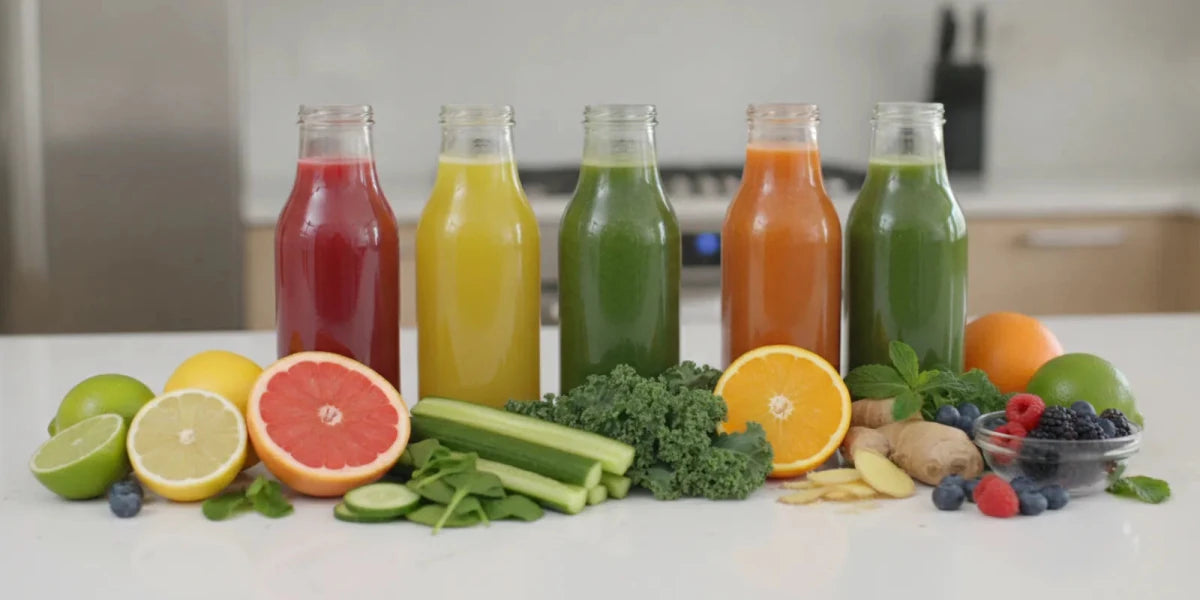
Juice cleanse recipes are easiest to plan when you build variety around flavor—bright citrus, mellow cucumber, leafy greens, warming ginger, and naturally sweet fruit—rather than repeating one combination all day. Use the ideas below as flexible kitchen inspiration, not as a prescribed nutrition plan.
What makes a juice recipe feel balanced in flavor?
A good-tasting juice has a clear lead flavor, a supporting note, and enough contrast to keep the sip interesting. For example, cucumber can make a blend taste cool and mild, citrus can sharpen it, and a small amount of ginger can add a warm finish. You do not need a long ingredient list. Start with two or three main ingredients, taste, and adjust gradually.
Think about flavor in four broad groups:
- Fresh and mild: cucumber, celery, or romaine can give a light, crisp base.
- Bright and tart: lemon, lime, or tart fruit can add a sharper note.
- Sweet and mellow: fruits such as pear, berries, or pineapple can round out a more vegetal blend.
- Warm and aromatic: ginger or mint can make a small amount go a long way.
These are home-recipe suggestions, not ingredient lists for PUR products. Product recipes can differ, so use the current label when you want to check exactly what is in a prepared juice. If you prefer choosing from ready-to-drink options, browse the PUR juice collection.
How can you plan a day of flavor variety?
Plan by taste and texture rather than assigning a health effect to each glass. A simple sequence might start with a crisp, mild combination, move to a bright citrus blend, and finish with a fruit-forward or gently spiced flavor. The goal is a menu you will actually enjoy, not a complicated schedule.
Use this framework to map a few options before shopping:
- Choose a base. Pick one main produce group, such as cucumber and leafy greens, or a fruit-forward base.
- Add contrast. Pair mild ingredients with citrus, herbs, or a small amount of ginger.
- Keep sweetness intentional. Let fruit add flavor, but avoid adding several sweet ingredients by default if you prefer a less-sweet taste.
- Make one test glass. Try a small batch first. Adjust the balance before preparing more.
- Write down what worked. Record approximate quantities and the order you used so you can repeat or refine it.
For example, a simple tasting plan could include cucumber, lemon, and mint as the crisp option; carrot, orange, and ginger as the brighter, sweeter option; and pear, spinach, and lime as the mellow green option. Make a small amount of each rather than preparing a large batch of every flavor. Taste them side by side and note which one you would willingly make again. If two combinations seem too similar, change one element—such as the citrus or herb—instead of adding several new ingredients at once.
Think about the whole experience as well as the ingredient list. A juice that tastes pleasant when freshly made may taste different after sitting, and some produce can create a thicker or more pulpy texture. Straining can change the texture, but it also changes what remains in the glass. There is no need to chase a perfectly clear result; the right texture is a matter of preference. If you are serving other people, ask about ingredients and preferences before combining everything into one batch.
If a juice routine is part of a broader eating plan, remember that juice and whole produce are not interchangeable in every respect. Ohio State University Wexner Medical Center notes that diets consisting only of juices are not very balanced and contrasts juicing with smoothies, which retain more of the fruit or vegetable. Read its overview of juicing versus smoothies for context. A short article or recipe list cannot determine what is appropriate for your individual needs.
Which juice cleanse recipe styles can you try at home?
The combinations below are starting points for flavor experiments. They are not formulated as complete meals or a personalized cleanse plan. Produce size, juicer type, and juicing technique affect the amount of juice each batch makes, so treat quantities as a starting ratio and adjust to taste.
1. Cucumber, lemon, and mint
Flavor: Cool, crisp, and tart. Combine one large cucumber with the juice of half a lemon, then add a few mint leaves. If using a juicer, juice the cucumber and stir in lemon and finely chopped mint afterward; strain the mint if you want a smoother texture. Use less lemon for a softer finish.
2. Carrot, orange, and ginger
Flavor: Sweet, citrusy, and gently warm. Try two carrots with one peeled orange and a very small piece of fresh ginger. Start with just a little ginger, taste, then add more only if you like its stronger, peppery note. This combination is naturally fruit-forward, so it may taste sweeter than the cucumber blend.
3. Pear, spinach, and lime
Flavor: Mellow with a bright finish. Use one ripe pear, a small handful of spinach, and a squeeze of lime. The pear softens the leafy taste; add lime a little at a time so it does not overwhelm the other flavors. If your juicer handles leafy greens unevenly, alternate spinach with pieces of pear.
4. Pineapple, cucumber, and lime
Flavor: Tropical, clean, and tart. Start with a few chunks of pineapple, half a cucumber, and a squeeze of lime. Adjust the cucumber upward for a milder taste or the lime upward for more sharpness. Pineapple varies in sweetness, so taste the juice before adding any other fruit.
5. Beet, carrot, and lemon
Flavor: Earthy, sweet, and bright. Use a small beet with one or two carrots and a squeeze of lemon. Beet can dominate quickly, so begin with a modest amount and add more only after tasting. If earthy notes are not your preference, increase the carrot or lemon rather than adding a large amount of another ingredient.
6. Apple, celery, and ginger
Flavor: Crisp, lightly sweet, and warming. Pair one apple with two celery stalks and a thin slice of ginger. Keep the ginger restrained for a gentle finish. You can swap part of the apple for cucumber if you want a less fruit-forward glass.
If a recipe is too tart, first reduce the lemon or lime rather than adding more fruit automatically. If it tastes too sweet, try adding cucumber or leafy greens in a small amount. If a leafy blend tastes strong, pair it with pear or a little citrus; if ginger takes over, make the next batch with a thinner slice. These changes keep a recipe manageable and help you learn which flavors suit you. Write down substitutions, since changing one ingredient can affect both taste and the amount of juice you get.
Related products

This cold-pressed strawberry juice blends fresh strawberries, lemon, and basil for a crisp and refreshing taste.
View product
Ready to explore the full range of PUR Cold Pressed juices?
View product
Select six juices, lemonades, or mylks per day
View productHow do you adjust a recipe after tasting?
Make changes in small, deliberate steps so you can tell what improved the glass. Pour a sample into a separate cup before changing the full batch. If it is too sharp, add a little more mild base, such as cucumber, rather than squeezing in a sweet fruit without tasting again. If it feels flat, a small squeeze of citrus or a leaf of mint can provide contrast. For a blend that tastes too earthy, try a small amount of carrot or pear; for one that tastes too sweet, dilute the fruit-forward flavor with a mild vegetable base.
Use a simple three-part note after each test: the dominant flavor, what you would change, and the amount you changed. For instance, write “ginger led; halve it next time” instead of “needs work.” Keep the original recipe and note each variation separately. This is especially useful when produce ripeness changes the result; a ripe pear or pineapple can taste sweeter than a less-ripe one, even if you use the same amount.
Texture is another adjustment, but it is separate from flavor. If a blend is too thick or pulpy for your preference, check whether your equipment permits straining or adding liquid, and follow its instructions. If it is thin but tastes good, there is no need to change it. Keeping texture notes alongside flavor notes helps you repeat a recipe without making several guesses the next time.
When testing a new combination, cut ingredients into pieces that fit your equipment and feed them in the order the manufacturer recommends. A juicer may handle firm produce and leafy greens differently, so use the manual rather than assuming every machine works the same way. Avoid preparing a large quantity until you know you like the result, and do not treat a recipe's estimated yield as exact; fruit size and juicing method can make the output vary.
For these home recipes, rinse whole produce under clean running water before cutting or juicing. Penn State Extension gives similar produce-washing guidance in its smoothie preparation overview. Keep cut ingredients and prepared juice handled and stored according to applicable food-safety guidance and the instructions for your equipment.
How do different ways of planning compare?
There is no single best format for everyone. Use the table to decide whether you want to experiment at home, choose ready-made flavors, or begin with a more structured assortment. It compares planning approaches, not nutritional outcomes.
| Approach | Works well when you want | What to plan |
|---|---|---|
| Make a small recipe batch | Control over ingredients and flavor | Produce, equipment, washing, preparation, and safe storage |
| Choose individual prepared juices | Convenient options without developing recipes | Read the current ingredient and nutrition information; select flavors you enjoy |
| Build a mixed kit | A selection of flavors or products in one order | Review the available choices and confirm kit contents before ordering |
| Follow a cleanse plan | A defined sequence and duration | Read the plan and product details; consider whether it suits your circumstances |
If you want to compare ways to personalize an order, start with PUR's kit-building page or explore the available daily juice kits. To review cleanse formats and current options, see the cleanse collection and the juice cleanse guide.
What should you consider before trying a juice-only routine?
Recipes tell you how to combine flavors; they cannot establish whether a juice-only routine fits your personal nutrition needs. Ohio State's overview cautions that a diet consisting only of juices is not very balanced. If you have a health condition, take medication, are pregnant or nursing, or are unsure whether a restrictive eating plan is suitable, ask a qualified health professional before making a significant change to what you eat.
For a more flexible approach, you can enjoy juice alongside meals and snacks instead of treating recipes as a substitute for all food. You can also make a smaller batch to try a flavor without committing to a full day's menu. If you are comparing different durations or formats, use PUR's three-day plan and five-day plan pages to review the details, and check the current product information before deciding.
How can you make home juicing easier to manage?
A little organization helps keep recipe testing practical. Before you shop, choose no more than two or three combinations to try. Make a short list of ingredients that overlap, then buy only what you can use while it is fresh. Keep the first batch small; changing one ingredient at a time makes it easier to identify what you like.
- Prep your workspace. Set out a cutting board, knife, juicer, and a container before you begin.
- Wash before cutting. Rinse produce under running water and dry it with a clean towel when appropriate.
- Read your equipment instructions. Some produce may need to be cut into smaller pieces or prepared differently.
- Clean promptly. Follow the manufacturer's directions for taking apart and washing the juicer.
- Keep notes simple. Record ingredients, rough amounts, and one change for next time.
Homemade recipes give you room to experiment, but they also require shopping, preparation, equipment, and cleanup. If convenience matters more than customizing each blend, you can browse the PUR recipe collection for ideas or use the wellness quiz to explore product choices. For questions about current options, the PUR FAQs may help.
How can you shop for a few recipe tests without overbuying?
Choose recipes with some shared ingredients, then vary one or two flavor accents. For example, cucumber can anchor both a cucumber-lemon-mint glass and a pineapple-cucumber-lime glass. Buy the cucumber once, then add a small bunch of mint, a piece of pineapple, and citrus for contrast. A carrot-orange-ginger test can share ginger or citrus with another blend, while pear and leafy greens make a separate mild option. This kind of overlap gives you variety without requiring a different shopping list for every glass.
Before buying, check what you already have and consider how quickly the produce can be used in other meals if a recipe is not a favorite. Plan which test to make first based on ripeness and freshness, rather than assuming every ingredient will keep equally well. Store produce as directed and prepare only the amount you expect to use. If a recipe needs a specialty ingredient you rarely use, test it in a small amount before making it the center of a larger batch.
It can also help to keep a “known favorites” list and a separate “try next” list. The first makes repeat choices easy; the second keeps experiments from turning into an overly ambitious grocery run. If home preparation is not convenient that week, compare ready-made options and their current details instead of buying ingredients that may go unused.
Frequently asked questions
Can I use these as a complete cleanse plan?
No. These are flavor combinations for home experimentation, not a complete nutrition plan or individualized instructions. If you are considering a juice-only routine, review its details and speak with a qualified health professional when you have questions about whether it suits you.
How many ingredients should a juice recipe have?
There is no required number. Two or three main ingredients are a useful starting point because each flavor remains easy to notice. Add a small amount of a strong ingredient, such as ginger or lemon, then taste before adding more.
Can I prepare juice in advance?
Follow your juicer manufacturer's instructions and current food-safety guidance for handling and storing fresh juice. If you are choosing prepared juice, follow the storage directions on the package rather than relying on a homemade recipe's timing.
How can I choose between making juice and ordering a kit?
Choose based on what you value most. Making juice at home gives you control over each combination and requires equipment and preparation. A kit offers a ready-made assortment; review its current contents and product details to find a match for your preferences.
Whether you experiment at home or choose prepared options, start with flavors you enjoy, check product details carefully, and make choices that fit your routine.