Cold-pressed juice vs pasteurized juice is not a simple contest between "good" and "bad." The two products can be made with the same fruits and vegetables, yet the processing method, handling, shelf life, and food-safety profile can be different. If freshness matters to you, the most useful question is not only how the juice was extracted. It is also what happened between harvest, pressing, bottling, chilling, and delivery.
Ready to taste the difference for yourself? Explore the PUR Cleanse Discovery Kit to sample a range of cold-pressed flavors before choosing a larger routine.
Quick answer: what is the difference?
Cold pressing is an extraction method. A hydraulic press slowly applies pressure to prepared produce to separate juice from fiber. The phrase describes how the juice is made, not whether the finished juice is pasteurized, treated with HPP, or safe to store at room temperature.
Pasteurization is a heat-based safety process. Juice is heated to a specified time and temperature to reduce harmful microorganisms. The exact treatment depends on the product and the applicable food-safety process.
HPP is a pressure-based preservation process. Sealed juice is placed in a water-filled chamber and exposed to very high pressure. HPP is not the same as hydraulic cold pressing. A juice can be cold-pressed and then HPP-treated, so a label needs to tell you more than just how the juice was extracted.
PUR takes a different approach. PUR says its juice is pressed and bottled within one hour of gathering ingredients at its source, with operations based in El Paso and Monterrey. The brand positions the juice as raw and unpasteurized, without HPP or heat treatment. That production choice makes time, temperature control, and clear storage instructions especially important.
Cold pressing and pasteurization solve different problems
It helps to separate the steps that happen in a juice facility. Extraction determines how liquid is removed from produce. Preservation determines how a product is treated after extraction. Distribution determines how it is kept stable on its way to you.
| Question | Cold-pressed juice | Pasteurized juice |
|---|---|---|
| What does the term describe? | How juice is extracted from produce, usually with a hydraulic press. | A heat treatment used to reduce microorganisms in juice. |
| Does the term alone tell you if the juice is raw? | No. Cold-pressed juice may be sold raw or may receive a later treatment such as HPP. | No. Pasteurization means the juice received a heat treatment, but labels still provide the details that matter to the buyer. |
| What usually makes the product feel fresh? | Fresh produce, short time from harvest to pressing, careful chilling, and cold storage. | Flavor, recipe, packaging, and how the product is stored after treatment. |
| What should you check at home? | Whether it arrived cold, its use-by guidance, refrigeration instructions, and the raw-juice warning when applicable. | The label, best-by guidance, storage instructions, and whether the bottle requires refrigeration. |
In other words, cold pressing does not replace a food-safety plan, and pasteurization does not automatically tell you what a juice will taste like. Quality is the result of the entire chain, not a single word on the front of a bottle.
Cold pressed juice vs pasteurized: what quality means in practice
When shoppers compare these products, they are often trying to balance three kinds of quality. Sensory quality is the flavor, aroma, color, and texture you notice in the glass. Ingredient quality is the freshness and transparency of the produce, the recipe, and the nutrition information. Use quality is whether the bottle fits your schedule, storage space, household needs, and willingness to manage a perishable food.
Cold-pressed juice may appeal to someone who wants a bright produce flavor and a short, easy-to-understand path from harvest to bottle. A pasteurized juice may appeal to someone who needs a wider shopping window or wants the extra processing step as part of their household food-safety decision. Neither preference makes the other product careless or inferior.
There is also a difference between a brand promise and a measurable production detail. "Fresh" is a helpful description, but it becomes more meaningful when a brand explains when the ingredients were picked, where pressing occurs, how quickly bottles are chilled, how the shipment is insulated, and what the customer should do on arrival. A label that names the treatment but says little about handling leaves part of the quality story unanswered.
For raw juice, the tradeoff is usually more active customer participation. You may need to plan refrigerator or freezer space, be home for delivery, move the order promptly, and follow the use-by guidance closely. For pasteurized juice, the process may make storage more forgiving, but you should still follow the package directions and keep the bottle in the condition the manufacturer specifies.
This is also why ingredient transparency matters. Processing cannot rescue a formula that does not fit your needs. Check whether a juice contains nuts, protein, herbs, citrus, or other ingredients that matter to you. Look at the nutrition facts and serving size. If you are comparing two products, put the treatment method, ingredients, storage requirements, and delivery plan side by side instead of judging only by front-label language.
How flavor, shelf life, and convenience can differ
Processing choices can influence the way a juice fits into a day. A raw, cold-pressed juice is often positioned around a just-made sensory experience. The flavor can feel vivid because the product is closely connected to the produce and may have a shorter time between pressing and drinking. That experience is part of the appeal, but it also comes with a shorter handling window and a greater need for reliable refrigeration.
Pasteurization can make distribution more predictable. A bottle can be produced, shipped through a broader retail network, and stored according to its package instructions with less dependence on an immediate cold-chain handoff. For a customer who travels, shops infrequently, or does not want to plan around a delivery, that convenience can matter more than a raw product claim.
HPP sits between those descriptions in the way shoppers often experience it. It can support a longer shelf life while preserving a fresh-tasting profile, but it remains a post-extraction treatment. The important question is not whether a treatment sounds modern. It is whether the finished product's ingredients, storage, flavor, and treatment status match your priorities.
These differences are not absolute rules. A well-made pasteurized juice can taste clean and bright, and a raw juice can vary with the season, produce, recipe, and time in storage. Even two batches of the same juice may taste slightly different when the ingredients are seasonal. That variation is one reason product-specific information is more reliable than a general claim about an entire category.
Think about the moment when you plan to drink the bottle. If it is part of a planned morning routine and you can keep it cold, raw cold-pressed juice may be a natural fit. If it needs to wait in a pantry or travel in a bag, a different treatment or product format may be safer and more practical. If you are buying a multi-day cleanse, confirm the delivery date, storage space, and thawing plan before placing the order.
Does cold-pressed mean healthier?
Not by itself. Cold-pressed describes extraction, not a complete nutrition judgment. A juice's overall profile depends on the fruits and vegetables used, the amount of naturally occurring sugar, the presence of protein or nut milk, the serving size, and what else a person eats during the day. A cold-pressed label cannot promise detoxification, weight loss, improved immunity, or treatment of a health condition.
Cold pressing can be meaningful to people who prefer a fresh produce flavor, raw ingredients, or a source-pressing story. Those are legitimate product preferences. They should not be confused with a medical claim. If a product is being used as part of a particular nutrition plan, or if someone has a condition that affects food choices, a qualified healthcare professional can help interpret that choice in context.
The same measured language applies to pasteurized juice. Pasteurization is not a mark of poor ingredients, and raw status is not a guarantee of better nutrition. The useful comparison is the one you can verify: ingredients, treatment, sourcing, processing controls, storage, and the role the drink plays in your routine.
How to compare two juice products before ordering
Online shopping makes the production story especially important because you cannot inspect the bottle or ask a staff member in the aisle. Before you order, look for these details on the product page or in the brand's support information:
- Production location and timing: Does the brand explain where the ingredients are pressed and how soon after harvest bottling occurs?
- Treatment status: Is the juice raw, unpasteurized, pasteurized, HPP-treated, or made with another preservation method?
- Cold-chain plan: Does the order ship in insulated packaging with cold packs or a frozen-delivery method suited to a perishable product?
- Arrival instructions: Does the brand explain when to bring the order inside, how to thaw it, and what to do if the package arrives warm or damaged?
- Product-specific details: Are ingredients, allergens, nutrition facts, serving guidance, and use-by instructions easy to find for the exact product?
- Support and guarantee: Is there a clear way to report a delivery issue and ask a question before or after ordering?
This checklist helps separate a complete freshness system from a single marketing phrase. It also makes comparison easier for first-time buyers. A company that explains the limits of its process, not just its advantages, gives you better information for making a confident choice.
What cold pressing actually changes
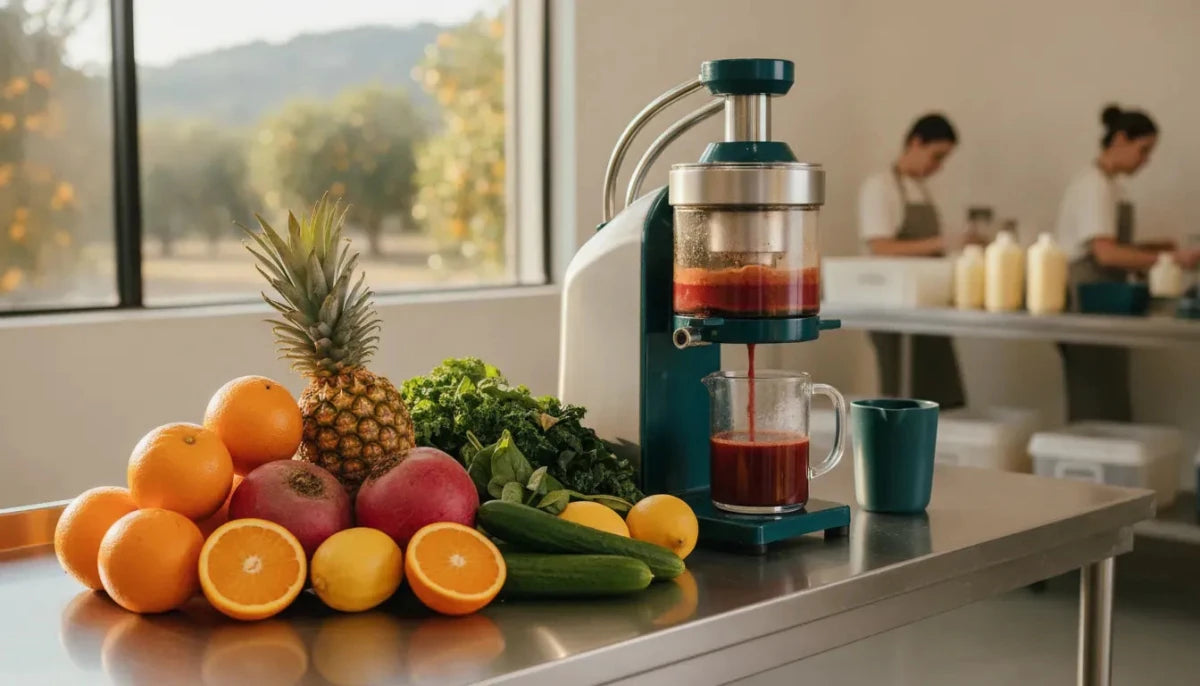
Cold pressing uses pressure instead of a high-speed spinning blade to extract juice. The produce is prepared, placed into the press, and squeezed through a filter or pressing cloth. This can produce a smooth, concentrated drink with a flavor profile that reflects the raw ingredients.
The phrase "cold-pressed" is often used to describe the extraction step because the method is designed to limit friction and avoid intentionally heating the produce during juicing. It does not mean that every bottle is kept at one temperature forever, and it does not mean that the juice has not received any later preservation treatment.
The ingredient list matters just as much as the machinery. A cold-pressed blend can include fruit, vegetables, citrus, herbs, protein ingredients, or nut milks. Two bottles can both be cold-pressed and still taste, store, and fit into a routine very differently. Look for the exact ingredients, allergen information, nutrition facts, and storage directions on the product page or bottle.
For a plain-language explanation of the extraction method, read PUR's guide to what cold-pressed juice is. This article goes one step further by looking at the production and preservation choices that come after extraction.
Related products

🌱 Mint – Cooling & Digestion-Friendly – Naturally soothes digestion, refreshes the palate, and helps reduce bloating.
View product
Loaded with vitamin K, A, and antioxidants to support bone health and immune strength.
View product🌱 Mint – Cooling & Digestion-Friendly – Naturally soothes digestion, refreshes the palate, and helps reduce bloating.
View productWhat pasteurization does to juice
Pasteurization uses controlled heat to reduce microorganisms that may be present in juice. It is a food-processing step, not a statement about whether a brand uses quality ingredients. Many pasteurized juices are made with carefully selected produce, and many raw juices are made with care. The meaningful comparison is how each product is processed, labeled, chilled, and handled.
Heat can change the sensory experience of a drink. Depending on the recipe and process, it may affect aroma, flavor, color, or texture. That does not mean every pasteurized juice tastes cooked, and it does not mean every unpasteurized juice tastes better. It means that the process can be part of the product's character, just as the ingredients and packaging are.
Pasteurization can also support a longer and more predictable distribution window. A longer shelf life can be useful for grocery shopping, food service, and shipping. If convenience and a wider storage window are your priorities, a pasteurized option may be the practical fit. If you prefer a raw product and can follow cold-storage guidance closely, an unpasteurized option may be more aligned with your preferences.
The U.S. Food and Drug Administration explains that untreated juice may contain harmful bacteria and that certain juice products must carry a warning statement. Read the FDA's juice safety guidance when deciding what is right for your household, especially if someone who is more vulnerable to foodborne illness will be drinking it.
Where HPP fits in the comparison
High Pressure Processing, or HPP, is often discussed alongside cold-pressed juice because many brands use the two terms together. They describe different steps. Cold pressing extracts juice from produce. HPP treats a sealed product with very high pressure after it has been filled.
HPP does not use the same heat-based process as traditional pasteurization, but it is still a form of processing. It can help a brand extend shelf life while keeping a fresh-tasting profile. That can be useful when juice needs to travel farther or remain available longer.
PUR does not use HPP for its raw juice, according to its production positioning. Instead, PUR emphasizes a shorter route from harvest to bottle, source pressing, cold-chain delivery, and a product made without pasteurization, HPP, or added preservatives. That is a distinct model, not a claim that every other preservation method is wrong.
For a deeper explanation of pressure processing itself, see PUR's article on what HPP is and why it matters. Keep the two topics connected, but do not treat HPP as a synonym for cold pressing.
Why time from harvest to bottle matters
A fresh ingredient story is more useful when it includes a measurable operating choice. Produce does not become fresher because a label uses the word "fresh." The time between harvest and processing, the condition of the produce, the sanitation program, and the temperature from bottling through delivery all affect the final experience.
PUR's "Juiced at the Source" model is built around pressing and bottling close to where ingredients are harvested. PUR says its Monterrey facility presses and bottles produce within one hour of harvest. In practical terms, that means the company is trying to shorten the path from field to bottle rather than shipping harvested ingredients long distances before they are pressed.
Shorter time to pressing can support a more direct flavor story and a simpler supply-chain explanation. It does not turn a beverage into a medical product, guarantee a health outcome, or eliminate the need for refrigeration. The benefit for a buyer is transparency: you can understand where the freshness claim comes from and what the brand is asking you to do after delivery.
PUR also describes its commitment to sourcing and production on its about cold-pressed juice page. That page is a useful starting point for the brand's production story, while the bottle and product page remain the best sources for current ingredients and product-specific directions.
Freshness is a chain, not a single processing label
When people ask whether cold-pressed juice is fresher than pasteurized juice, they are usually asking several questions at once:
- How recently was the produce harvested?
- How soon was it pressed and bottled?
- Was the juice treated after bottling?
- How long did it spend in transit?
- Did it stay cold when it arrived?
- How quickly will it be consumed after opening?
A raw juice pressed hours after harvest and kept cold may offer a different freshness experience from a pasteurized juice made weeks earlier. A pasteurized juice made from excellent produce may taste better to another customer because it has a flavor profile they prefer and a storage window that fits their schedule. Processing matters, but elapsed time and handling matter too.
This is why a trustworthy juice brand should explain more than a press type. Look for production timing, treatment status, delivery method, storage instructions, ingredient transparency, and an easy way to contact the company if a shipment arrives warmer than expected.
How PUR protects the cold chain after bottling
Raw, unpasteurized juice needs clear handling instructions. PUR's delivery model is designed for nationwide cold delivery, with orders arriving frozen or icy cold in reusable cold-pack coolers. A frozen bottle is not a defect by itself. It is part of how the brand protects a perishable product during transit.
When your order arrives, inspect the package promptly. Move the bottles to the freezer or refrigerator according to the current product instructions, keep the cooler and cold packs for the next step in the return or reuse program when applicable, and contact PUR promptly if the shipment arrives warm or damaged. Do not rely on a general article to replace the instructions attached to your order.
For delivery timing, packaging, and what to do when a shipment arrives, use PUR's juice delivery information. It is also the right place to check current delivery terms because shipping policies can change independently from the production process.
Once opened, handle juice as a perishable food. Keep it cold, use a clean glass or cup, close the bottle, and follow the label's use-by instructions. If the smell, appearance, package, or temperature seems unusual, do not take chances. Contact the company or discard the product according to the situation.
What the FDA says about raw and untreated juice
Freshness and food safety are related, but they are not the same thing. A raw juice can taste bright and still require careful handling. The FDA notes that untreated juice may contain harmful bacteria and that juice sold in certain settings may be subject to warning-label requirements. It also identifies children, older adults, pregnant people, and people with weakened immune systems as groups who face greater risk from foodborne illness.
The FDA's juice safety guidance is a neutral source for understanding this tradeoff. It is not a reason to make a blanket judgment about every raw juice brand. It is a reminder to read the label, understand the treatment status, respect refrigeration instructions, and choose products that match the needs of everyone who may drink them.
Commercial juice manufacturers also operate within food-safety systems. The FDA's Juice HACCP resource explains the hazard-analysis framework used for juice processing and importation. A brand's extraction method is only one part of the broader safety system.
The USDA has also published guidance explaining why pasteurized juice is preferred in certain child nutrition settings. Read the USDA pasteurized juice guidance for that context. If you are buying juice for a child, pregnancy, an older adult, or someone with a weakened immune system, ask a qualified healthcare professional for advice that fits the person's specific situation.
How to read a juice label for quality and freshness
Front-of-bottle language is a starting point, not the whole answer. Use this checklist when comparing a cold-pressed juice with a pasteurized one.
1. Check the treatment status
Look for words such as raw, unpasteurized, pasteurized, HPP, or high pressure processed. If the label is not clear, check the product page or ask the company. Do not assume that cold-pressed means raw, and do not assume that a product with no preservatives is unprocessed.
2. Read the ingredients
Choose a formula that fits your preferences and dietary needs. Confirm the ingredients for the specific flavor, including nuts, protein ingredients, fruit, vegetables, herbs, and any added components. A brand-level statement is not a substitute for a product-level ingredient list.
3. Look for added sugar and additives
PUR positions its products as made from real fruits and vegetables with no added sugar, preservatives, or artificial ingredients. Verify current product details on the product page because formulations can vary by bottle and may change over time.
4. Find storage and use-by guidance
A quality product should make it clear whether it needs refrigeration, how it should be thawed, and how soon it should be consumed after opening. Follow the label over a general internet rule.
5. Understand the delivery plan
Perishable juice should arrive with a delivery method suited to its treatment status. Check whether the brand uses insulated packaging, cold packs, frozen delivery, or another cold-chain approach. A transparent delivery page is a positive trust signal.
6. Look for a real customer support path
Freshness questions are practical. You may need help with a delayed shipment, an unusual bottle, or a storage question. Choose a company that explains what to do and responds through an identifiable support channel.
Want an easier way to choose your first order? Take the PUR wellness quiz to narrow the options by your preferences, then review the ingredients and storage details for the products it recommends.
Which type of juice is right for your routine?
The best choice depends on the job you need the juice to do.
- Choose raw, cold-pressed juice if you value a source-pressing story, a fresh produce flavor, and can follow cold-storage and handling instructions carefully.
- Choose pasteurized juice if a longer or more predictable storage window is important to your shopping and travel routine, or if pasteurized juice is the better fit for your household's food-safety needs.
- Consider an HPP-treated juice if you want a product designed for longer storage while retaining a fresh-tasting profile, and you are comfortable with pressure processing.
- Compare the complete product rather than the front label alone. Ingredients, treatment, cold chain, packaging, and customer support all belong in the decision.
There is no universal winner. The right choice is the one that fits your preferences, your schedule, your storage capacity, and the people who will be drinking it.
What makes PUR's Juiced at the Source model different?
PUR's point of difference is not simply that the juice is cold-pressed. It is the relationship between sourcing, timing, treatment, and delivery:
- Produce is pressed and bottled within one hour of gathering ingredients at the source, according to the brand's production information. PUR is based in El Paso and also maintains operations in Monterrey.
- The juice is positioned as raw and unpasteurized, without HPP or heat treatment.
- The formulas are built from real fruits and vegetables without added sugar, preservatives, or artificial ingredients, subject to the details of each product.
- Orders are shipped nationwide using cold-delivery packaging intended to keep perishable juice cold in transit.
- Customers can choose from individual juices, daily kits, cleanses, discovery kits, protein blends, nut milks, and wellness shots.
That model is designed for people who want a clear connection between ingredients and finished bottle. It also asks the customer to participate in the quality system by receiving the order promptly, keeping it cold, and following product instructions.
If you are new to raw juice, a discovery kit can be a more comfortable starting point than guessing which full cleanse will suit you. PUR's Ultimate Discovery Kit and Build Your Own Discovery Kit offer different ways to explore the range. Review the current product details before ordering because assortment and availability can change.
Freshness questions to ask before you buy
Is cold-pressed juice always unpasteurized?
No. Cold-pressed describes extraction. Some cold-pressed juices are later pasteurized or HPP-treated. Check the treatment statement on the bottle or product page.
Is pasteurized juice lower quality?
Not automatically. Pasteurization is a heat treatment used to reduce microorganisms. Quality still depends on ingredients, formulation, processing controls, packaging, storage, and how the product fits your preferences.
Is HPP the same as cold pressing?
No. Cold pressing extracts juice from produce. HPP applies high pressure to a sealed product after filling. A product can use both steps, so read the label carefully.
How should raw juice be stored?
Follow the product label and delivery instructions. Keep it cold, store it promptly, and use it within the stated window. If an order arrives warm or the package looks compromised, contact the seller before drinking it.
Does fresher juice guarantee a health benefit?
No. Freshness is a quality and sensory consideration, not a promise to diagnose, treat, prevent, detox, or cure a condition. Juice can be one convenient way to include fruits and vegetables in a routine, but it should not replace individualized nutrition or medical advice.
Where can I learn more about PUR's production process?
Start with the PUR sustainability and sourcing page, the sustainable sourcing article, and the current product and delivery pages. These resources explain the brand's approach while the label provides the details for the specific bottle in your order.
Ready to build a routine around juice you can understand? Browse PUR's cold-pressed cleanse collection or visit the subscription page to review flexible recurring-order options. You can choose the level of commitment that fits your schedule, including one-time discovery before a recurring order.
The bottom line
Cold-pressed juice vs pasteurized juice is really a comparison of extraction, preservation, handling, and personal fit. Cold pressing can create a fresh, ingredient-forward drink, but the term alone does not tell you whether the juice is raw or how it was handled. Pasteurization can support food safety and a longer storage window, but it does not define the quality of the ingredients or the taste of the finished product. HPP offers another preservation approach, and it should not be confused with cold pressing.
PUR's Juiced at the Source model focuses on a short path from harvest to bottle, raw and unpasteurized juice, no HPP or heat treatment, and cold delivery. If that approach fits your priorities, start with the label, verify the current product details, follow the storage guidance, and choose a kit or cleanse that matches your routine. It really can be that simple when the process is explained clearly.