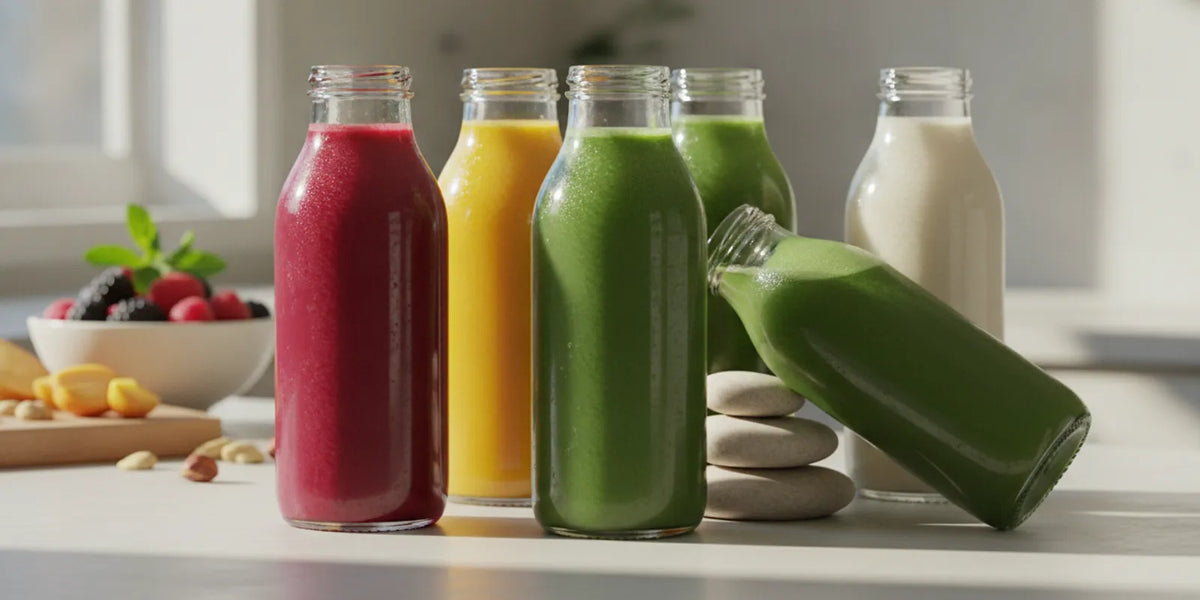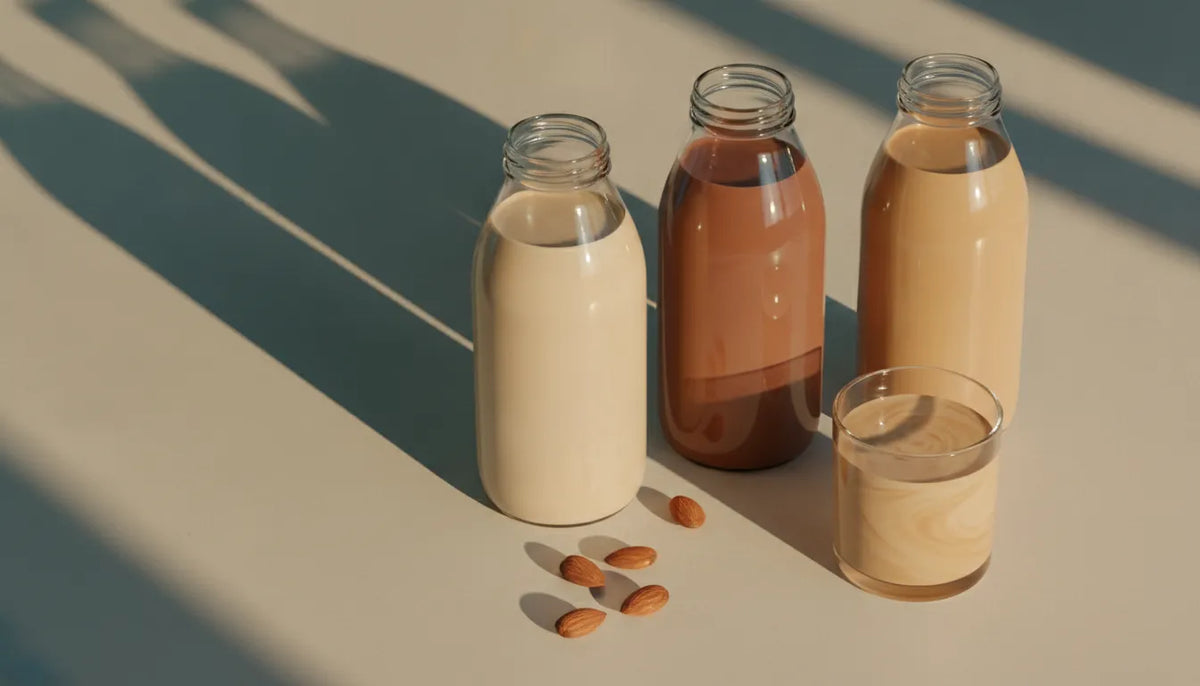
Nut milk nutrition is not one number on the front of a bottle. Two almond drinks can share a name and still differ in protein, sugar, and what was added to make them creamy or sweet. The useful comparison is the label: serving size, ingredients, protein, total sugars, and added sugars.
Start with the container in your hand. The U.S. Food and Drug Administration says the Nutrition Facts label is based on one serving, and that serving size is not a recommendation of how much to drink. If the bottle is one serving, the panel is the whole bottle. If a carton has several servings, multiply before you compare it with a single bottle.
Compare PUR almond milks and protein blends
The sections below use three current PUR almond-milk labels as worked examples. Each is one 355 ml bottle. They are not a ranking of which nut milk is healthiest, and they are not a substitute for the ingredient list on the bottle you buy.
Match the serving size before you compare nut milk nutrition
A nut milk panel is only comparable when the servings match. The FDA prints servings per container and serving size in large type because one package can hold more than one serving. Comparing a 240 ml cup with a 355 ml bottle makes the larger bottle look higher in calories and protein even when the drinks are similar per cup.
PUR's current vanilla, chocolate, and cold brew almond milks each list one serving per container and a serving size of 1 bottle (355 ml). On those three bottles, the calories, protein, and sugars you see are the whole bottle. A grocery carton that says 8 servings needs a different kind of math.
What to write down first
- Servings per container.
- Serving size, in milliliters or cups.
- Whether you will drink one serving or the whole package.
Percent Daily Value is also per serving. As a general FDA guide, 5% DV or less of a nutrient is low and 20% DV or more is high. A 2,000-calorie day is the label's reference, not a personal target. Your own needs depend on age, body size, and activity.
Takeaway: compare one serving with one serving, then decide if you will drink the whole package.
If you want the process story behind a cold-pressed almond drink, that is a different question from the panel. Choosing cold-pressed almond milk covers how PUR's almond blend compares with a typical store carton. This page stays on the numbers.
Read the ingredient list before the front of the bottle
Ingredients are listed by weight, so the first words tell you what the drink is mostly made of. On a nut milk, that is often nut and water, then anything used for sweetness, body, or protein. Front-of-pack words such as vanilla, chocolate, or protein do not replace that list.
These are the ingredient lists printed on PUR's current nutrition pages:
- Vanilla Almond + Protein: almond milk (almonds, water), dates, pea protein, cinnamon powder, vanilla extract.
- Choco + Protein: almond milk (almonds, water), coconut milk (coconut, water), dates, pea protein isolate, cocoa powder, cinnamon powder, vanilla extract.
- Cold Brew + Protein: cold brew coffee, almond milk (almond, water), coconut milk (coconut, water), agave nectar, cocoa powder, pea protein, vanilla extract.
The first two lists start with almond milk and use dates. The cold brew list starts with coffee and includes agave nectar. That single ingredient difference shows up later in added sugars. Coconut milk appears in the chocolate and cold brew blends and not in the vanilla blend, which matters for anyone avoiding coconut.
What the list does not prove
An ingredient list does not tell you grams of protein or sugar. It also does not tell you that every bottle has the same sugar line. The cold brew nutrition page lists agave nectar in the ingredients and 10 grams of added sugars on the panel. The product description on the same drink says it has no refined sugar and 9 grams of protein. Those lines do not match the nutrition page, which lists 8 grams of protein and 10 grams of added sugars. When a description and a nutrition panel disagree, use the nutrition page for that bottle.
Pea protein on these labels explains why the protein number is higher than a plain almond drink made mostly of almonds and water. It does not, by itself, tell you the gram amount. That number is in the next section.
Compare protein, sugar, and calories on the same serving
Once the serving size matches, the panel is a short checklist: calories, protein, total sugars, and added sugars. Total sugars include sugars that come from ingredients such as dates. Added sugars are the sugars put in during processing, including syrups such as agave nectar. The FDA says the word "includes" means those added grams are already inside the total sugars line. They are not extra on top.
The table uses the three PUR nutrition pages as printed on 26 October 2026. Each row is one 355 ml bottle. The cold brew product page also says "9g of Plant-Based Protein." That sentence is not what the nutrition page prints, so the table uses 8 grams from the panel.
| Label line. | Vanilla Almond + Protein. | Choco + Protein. | Cold Brew + Protein. |
|---|---|---|---|
| Serving. | 1 bottle, 355 ml. | 1 bottle, 355 ml. | 1 bottle, 355 ml. |
| Calories. | 220. | 230. | 230. |
| Protein. | 9 g. | 9 g. | 8 g. |
| Total sugars. | 11 g. | 6 g. | 12 g. |
| Added sugars. | 0 g. | 0 g. | 10 g. |
| Sweetener on the ingredient list. | Dates. | Dates. | Agave nectar. |
Takeaway: read the table as a label lesson, not a health ranking.
Vanilla and chocolate both list 0 grams of added sugars, while their total sugars come to 11 grams and 6 grams. Those sugars are still in the bottle. They are not a free pass, and they are not the same thing as added sugars. Cold brew lists 12 grams of total sugars, and 10 of those grams are added sugars. That is 20% of the FDA's Daily Value for added sugars, which is 50 grams a day on a 2,000-calorie diet. By the FDA's own guide, 20% DV or more is high for one serving.
Protein is close across the three bottles: 9 grams for vanilla, 9 grams for chocolate, and 8 grams for cold brew. The cold brew product page says 9 grams, but the nutrition page says 8 grams, and the table follows the nutrition page. If protein is the reason you picked the drink up, compare that gram line with the pea protein on the ingredient list, then decide whether the sugar line still fits your day. A higher protein number does not cancel a high added-sugar number.
The FDA added sugars page is the reference for the "includes" line and the 50-gram Daily Value. Dietary Guidelines for Americans suggest keeping added sugars under 10% of daily calories. For a 2,000-calorie diet, that is the same 50 grams.
Related products

Introducing our Protein Daily Kits – a carefully curated selection of plant-based mylks to power up your daily routine.
View product
Craving something sweet but still want that protein boost?
View product
Get your new go-to meal replacement with our delectable Vanilla Almond Milk + Protein.
View productCheck allergens on the ingredient list, not the flavor name
Almond milk contains almonds. Almonds are a tree nut, so anyone with a tree-nut allergy should treat these bottles as almond products even when the flavor name says vanilla, chocolate, or cold brew. Flavor words do not remove the nut.
Coconut is a separate check. The chocolate and cold brew ingredient lists include coconut milk. The vanilla list on the current page does not. Coconut is not the same ingredient as almond, and a person who avoids one may not avoid the other. Read the list for the bottle in the pack you ordered, because a mixed pack can hold more than one recipe.
A few limits are worth stating plainly:
- These pages do not print a "may contain" or shared-equipment statement. Do not assume one exists, and do not assume the absence of that sentence answers an allergy question.
- Pea protein is a legume ingredient, not a tree nut. It still belongs on the list you scan if you avoid peas.
- This article cannot tell you whether a drink is safe for your allergy. If you have a tree-nut, coconut, or pea allergy, use the ingredient list and ask your clinician before you order.
Takeaway: the flavor name is not an allergen list. Read the ingredients on the exact bottle.
The same habit covers every other nut milk you compare, including cashew or macadamia drinks that are not in this table. Find the nut in the ingredient list, then look for sweeteners, proteins, and any second plant milk.
Use the label to choose a bottle, then check the current pack
A practical way to choose is to pick one priority and let the panel settle it. If you want 0 grams of added sugars on the current nutrition pages, vanilla and chocolate list that, and cold brew does not. If you want the protein line, vanilla and chocolate list 9 grams and cold brew lists 8 grams. If you are avoiding coconut, only the vanilla ingredient list, as printed today, leaves coconut milk off.
PUR sells these drinks as individual bottles and in packs. The Almond Milks + Protein Daily Pack page shows vanilla almond mylk in 12 oz packs and also describes a trio of almond milks. Those two descriptions do not confirm a single flavor mix. Open the pack page and read the current contents before you assume chocolate or cold brew is in the box.
The Harmony juice and nut milk cleanse is a different product. It pairs cold-pressed juices with plant-based nut milks over 3, 5, or 7 days. Choosing a cleanse length is its own decision. This label guide does not tell you how long to cleanse or what to expect on each day.
Storage is on the product page, not in the nutrition panel. PUR says to serve these bottles chilled, refrigerate them at 0 to 5°C, and drink an opened bottle within 48 hours. Orders ship cold inside the United States. Current shipping thresholds and timing are on the shipping policy, and they can differ for subscribers and one-time orders, so use that page rather than a number from an older guide.
See the vanilla almond milk label and bottle
If you are comparing a nut milk with a protein juice, keep the labels side by side. What a protein juice cleanse includes explains that format, and the protein juice cleanse guide covers how people use those juices around training. Neither page replaces the almond-milk panel.
Frequently asked questions
What should I compare first on a nut milk label?
Compare serving size first, then protein, total sugars, and added sugars. The FDA bases the Nutrition Facts numbers on one serving, and the serving size is not a suggested amount to drink. PUR's current vanilla, chocolate, and cold brew almond milks are each one 355 ml bottle, so those panels already describe the whole bottle.
Are total sugars and added sugars the same thing?
No. Total sugars include sugars from ingredients such as dates. Added sugars are sugars added in processing, including agave nectar and other syrups. The FDA prints added sugars with the word "includes" because those grams sit inside the total sugars number.
On the current PUR nutrition pages, vanilla has 11 grams of total sugars and 0 grams added. Chocolate has 6 grams total and 0 grams added. Cold brew has 12 grams total, including 10 grams added.
Why does one almond milk have more protein than another?
Plain almond milk is often mostly almonds and water, so the protein grams can be low. PUR's three bottles list pea protein in the ingredients. The nutrition pages show 9 grams for vanilla, 9 grams for chocolate, and 8 grams for cold brew. The cold brew product page says 9 grams, so use the nutrition page when those two disagree. Check the gram line on any other brand rather than assuming the word protein means the same amount.
Does nut milk contain allergens?
Almond milk contains almonds, which are tree nuts. PUR's chocolate and cold brew bottles also list coconut milk, and all three list pea protein. The nutrition pages used here do not print a shared-equipment warning. If you have a food allergy, read the ingredient list on the exact bottle and check with your clinician.
Can I tell which nut milk is healthiest from this table?
No. The table shows serving size, calories, protein, and sugars for three PUR bottles. It does not rank nut milks, compare them with dairy milk, or promise a health result. Use it to see what is in the bottle you are considering, then decide what fits your own diet.
Nut milk nutrition comes down to the label
Check four lines: one serving or many, the ingredient order, the protein grams, and whether the sugars are total sugars or added sugars. The three PUR bottles show how those lines change even inside one almond-milk lineup.
When you are ready to look at the current drinks, start with the bottle whose label matches what you want, then confirm the pack contents before you order.