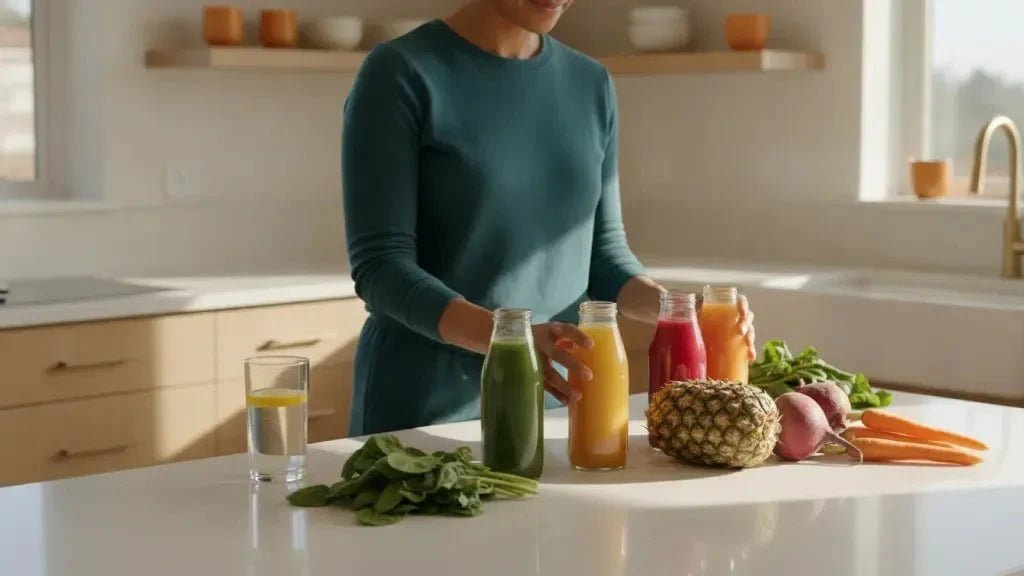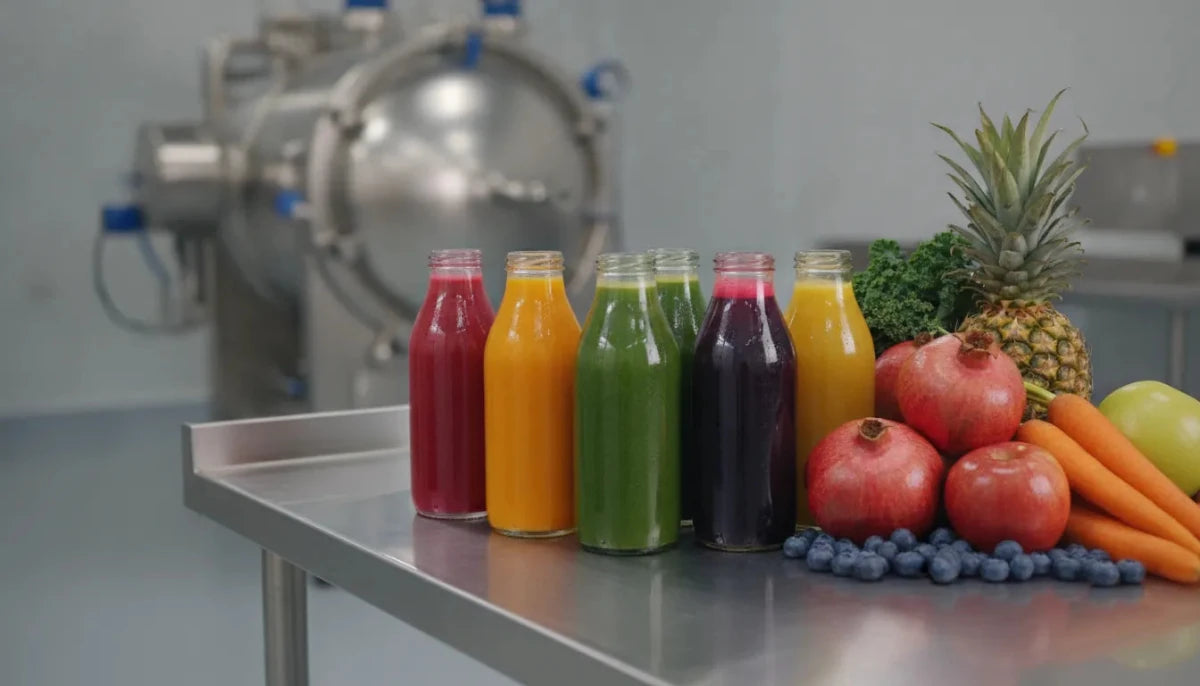
Juice labels can describe the same drink as cold-pressed, raw, pasteurized, or HPP-treated, but those terms refer to different steps. The key distinction is whether the juice is treated after extraction and, if so, whether that treatment uses pressure or heat.
In simple terms, what is hpp juice? It is juice sealed in its final package and exposed to very high water pressure as a non-heat preservation step. HPP can support a longer refrigerated shelf life. Heat pasteurization relies on controlled heating. Raw cold-pressed juice is extracted without either HPP or heat treatment, so read processing labels alongside storage and handling guidance.
PUR takes a different approach. Its Juiced at the Source positioning means juice is pressed and bottled within one hour of harvest at its Monterrey operation. The brand describes its products as raw and unpasteurized, with no HPP or heat treatments. That is a processing choice, not a universal verdict on which method is best. First, look closely at what HPP does after juice is pressed.
What Is HPP Juice?
HPP juice is juice that has been sealed in its final package and exposed to very high water pressure after it has been extracted. HPP stands for high-pressure processing. It is a non-heat preservation method often described as cold pasteurization, although the product is still treated rather than truly raw.
The key distinction is between extraction and preservation. Cold pressing, squeezing, or another method creates the juice. HPP happens afterward. During the process, packaged juice is placed in a pressure vessel and surrounded by water. The pressure is applied evenly through the package, rather than using heat as the primary treatment. An academic review describes HPP as a technology for prepackaged products that uses isostatic pressure, with applications commonly reported in the 300 to 600 MPa range. Read the academic review of HPP.
That treatment can help a juice brand manage preservation and distribution while maintaining a minimally processed product profile. The exact result depends on the juice, packaging, pressure conditions, storage, and other production choices. HPP should not be treated as a guarantee that every nutrient or quality characteristic will remain unchanged.
HPP is also different from a safety-free claim. The FDA defines juice as liquid extracted from fruits or vegetables, including certain purees and concentrates, and its juice guidance addresses processors covered by Juice HACCP requirements. Those requirements still apply when a processor pasteurizes its juice. See the FDA juice guidance.
When comparing bottles, look beyond the words "cold pressed." Ask whether the juice is HPP-treated, heat-pasteurized, or untreated, and follow the label's refrigeration and handling instructions. Cold pressing describes how juice is made; HPP describes what may happen to it afterward.
How High-Pressure Processing Works
HPP is applied after juice has been extracted and packaged. Instead of heating the liquid, a processor places the sealed bottle or container inside a vessel filled with water and subjects it to intense, evenly distributed pressure. Academic reviews describe this as a non-thermal, or cold-pasteurization, process that treats food in its final package. Research on high-pressure processing also notes that HPP is used for minimally processed foods, although the result depends on the product and the full processing method.
- The juice is extracted. Fruits and vegetables are pressed or otherwise processed into juice. HPP does not replace the extraction method, so terms such as cold-pressed describe how the juice was made, while HPP describes a later treatment.
- The juice is sealed in its final package. The filled bottle or container must be closed before treatment. This allows pressure to act through the package and across the liquid rather than exposing the juice to air during the pressure step.
- The package enters a water-filled pressure vessel. Water transfers pressure around the sealed container. Because the pressure is applied throughout the product, it reaches the juice more uniformly than a treatment that heats only from the outside inward.
- The pressure is held for a programmed cycle. The processor uses a selected pressure and duration based on the beverage, package, and intended outcome. The treatment can reduce certain microorganisms without relying on conventional heat, but HPP is not a universal substitute for every food-safety control. HPP alone also does not inactivate most microbial spores and enzymes, according to the academic review cited above.
- The treated juice is removed and stored as directed. Processing does not eliminate the need to follow the product's refrigeration and handling instructions. Read the label for whether a juice is treated, how it should be stored, and how long it remains suitable for consumption.
That process helps explain why two bottles can both be labeled cold-pressed yet have different treatment, storage, and shelf-life considerations. The next section compares HPP juice with heat-pasteurized and raw cold-pressed juice so you can evaluate those differences side by side.
HPP Juice vs Heat-Pasteurized and Raw Cold-Pressed Juice
Cold-pressed describes how juice is extracted. HPP, heat pasteurization, and raw handling describe what may happen after extraction. Keeping those terms separate makes a bottle's processing story easier to understand. For a closer look at the distinctions, read this guide to cold-pressed juice vs pasteurized.
| Approach | What happens | What to check |
|---|---|---|
| HPP | Packaged juice is placed in a vessel and exposed to high isostatic pressure. It is often described as a non-heat or cold pasteurization process. | Look for HPP or high-pressure processing, plus storage and refrigeration instructions. |
| Heat pasteurization | Juice is treated with heat as part of a preservation process. The exact method and conditions can vary by product. | Check whether the label says pasteurized and follow the stated storage guidance. |
| Raw cold-pressed | Juice is extracted with a cold-press method and is not subsequently treated with HPP or heat, when the brand identifies it as raw and untreated. | Look for clear raw or unpasteurized language, refrigeration directions, and any required warning statement. |
HPP and heat treatment are preservation choices
HPP is a post-press treatment, not a different way to extract juice. An academic review describes HPP as treating food in its final package with isostatic pressure and notes that it is used for minimally processed products with extended shelf life. Results vary by recipe and process, so research on one beverage should not be treated as a universal prediction for every juice. This academic review of high-pressure processing explains the technology and its applications.
Heat pasteurization also has product-specific outcomes. A study of an aloe vera-litchi beverage compared HPP and thermal processing under defined conditions. That shows why comparisons should name the beverage and method rather than make blanket claims. Neither approach automatically tells you whether a juice fits your personal preferences.
Raw juice requires closer label attention
Raw does not mean universally better or safer. It means the juice has not received a stated treatment such as heat pasteurization or HPP. The FDA defines juice and regulates covered juice processors through Juice HACCP requirements. Consumers should also check whether a product is treated, whether it must remain refrigerated, and whether the package carries a warning. For more extraction terminology, see how cold-pressed juice is made.
Related products


Made for athletes or anyone looking for an added protein boost to their cleanse.
View productIs HPP Juice Healthy or Better?
HPP juice can be a practical choice, but "healthy" and "better" depend on what you value. High-pressure processing may support refrigerated shelf life while avoiding the same heat exposure used in thermal pasteurization. It does not automatically make a juice more nutritious, safer for every person, or preferable to every alternative.
HPP is a preservation step, not an extraction method. Juice may be cold-pressed first and then treated in its sealed package. A review in Foods describes HPP as a minimally processed technology used to extend shelf life, while noting that results vary by product and process conditions. Read the academic review of high-pressure processing.
Does HPP destroy nutrients?
That answer is not simply yes or no. Nutrient changes depend on the ingredient, temperature, pressure, treatment time, packaging, and storage conditions. In one study of an aloe vera-litchi beverage, researchers measured ascorbic acid losses in both HPP-treated and thermally treated samples. The results applied to that specific formula and process. Those findings should not be applied to every juice. They also do not justify promising that HPP preserves all nutrients.
Is HPP better than pasteurization?
HPP may appeal to shoppers who want a refrigerated juice with a minimally processed positioning and no conventional heat step. Heat pasteurization may appeal to people who prioritize a familiar treatment process. Neither label alone answers every food-safety question. The FDA explains that juice processors covered by its Juice HACCP regulation must comply with the requirements for each type of juice they produce, including when juice is pasteurized. Check the product's treatment, storage, and handling instructions rather than assuming one method is universally best.
In short, compare the process with your priorities: taste, freshness, refrigeration, shelf life, and whether the juice is treated. The best choice is the one whose processing and storage requirements fit how you shop and drink it.
What PUR Means by No HPP and Juiced at the Source
PUR's no-HPP approach is one part of its broader production philosophy. PUR describes its juices as raw and unpasteurized, with no high-pressure processing (HPP) and no heat treatment. That choice is not a claim that one processing method is right for every shopper. It is a clear explanation of how PUR makes and handles its products.
The phrase "Juiced at the Source" refers to the timing and location of that process. PUR says its juice is pressed and bottled within one hour of harvest at its Monterrey, Mexico pressing and bottling operation. El Paso is the company's headquarters and business operations location. Keeping those details distinct helps shoppers understand what the phrase means without implying that Monterrey is the company's only facility.
HPP is a preservation method used by some juice brands after juice has been extracted and packaged. PUR takes a different route. Its positioning centers on raw, unpasteurized juice and the close connection between harvest, pressing, and bottling. The result is a brand-specific production model, not a universal ranking of HPP, heat treatment, or untreated juice.
For a broader explanation of extraction and processing, read PUR's cold-pressed juice vs pasteurized guide. You can also review the practical differences in how cold-pressed juice is made.
If PUR's raw, no-HPP approach fits what you are looking for, explore the PUR cold-pressed juice cleanses. As with any refrigerated juice product, follow the product's storage and handling instructions, and review its labeling before ordering.
How to Read a Juice Processing Label
A juice label can tell you more than the flavor and ingredient list. It can also help you understand whether the juice was treated after extraction, how it should be stored, and what precautions apply. If the processing method is not clear, contact the brand before ordering.
Start with these practical questions:
- Was the juice treated? Ask whether it is untreated, pasteurized, or processed using a non-heat method such as high-pressure processing. If you are asking, "What is HPP juice?" the key label detail is whether HPP is named as the post-press treatment.
- Does the label say HPP or pasteurized? HPP and heat pasteurization are different processing approaches, so look for the specific term rather than assuming that "cold-pressed" describes the entire process. Cold pressing describes how juice is extracted, not necessarily how it is treated afterward.
- What are the refrigeration directions? Follow the storage instructions on the package. Keep the product refrigerated when directed, and check whether the label identifies it as requiring refrigeration.
- Is there an untreated-juice warning? FDA guidance defines juice as liquid extracted from fruits or vegetables and explains that juice processors covered by its rules must comply with juice safety requirements. A warning or treatment statement is useful context, not a reason to ignore the package directions. Read the FDA juice guidance.
For a plain-language refresher on processing terms, keep PUR's cold-pressed juice glossary handy. When a product page or label leaves a treatment detail unanswered, asking the brand directly is the simplest way to make an informed comparison.
Explore PUR's cold-pressed juice cleanses to compare available formats and find a routine that fits your preferences.
Frequently Asked Questions
Is HPP juice healthy?
HPP juice can fit a balanced diet, but "healthy" depends on the ingredients, serving size, and your preferences. HPP is a processing method, not a nutrition claim. Check the ingredient list and storage instructions, and choose the treatment style that suits your priorities.
Does HPP destroy nutrients?
HPP does not produce one universal nutrient result. Outcomes vary by juice, pressure, temperature, and treatment time. One study of an aloe vera-litchi beverage measured ascorbic acid losses of up to 22 percent after HPP and up to 31 percent after thermal processing. So results from one beverage should not be generalized to every juice (academic study).
Is HPP better than pasteurization?
Neither method is automatically better for every shopper. HPP uses pressure on a sealed package, while traditional pasteurization uses heat. HPP may support minimally processed products and extended shelf life, while heat treatment remains a common safety approach. Compare the label, refrigeration requirements, ingredients, and processing method for the product you are considering.
Is HPP juice raw?
No. HPP juice may be cold-pressed before it is placed in its final package and treated with pressure, but it is not untreated raw juice. If a product is labeled raw or untreated, check what the brand means and whether it includes a food-safety warning. FDA juice guidance explains that covered juice processors must follow Juice HACCP requirements, including processors that pasteurize juice (FDA guidance).
Ready to Explore PUR Cold-Pressed Juice?
If you value a clear, straightforward approach to juice processing, PUR makes it simple to choose a cleanse that matches your routine. Explore the available formats and find an option that fits how you want to enjoy cold-pressed juice.